
Cole Palmer, Xabi Alonso and Chelsea's Data Gap
**Câu trả lời cốt lõi:** Khởi đầu mùa 2026/27 của Cole Palmer tại Chelsea dưới thời Xabi Alonso được dựng trên bốn bàn và hai kiến tạo không có nguồn, cộng một tiền mùa giải trọn vẹn sau mùa hè chữa chấn thương. Tín hiệu thể lực là thật; tín hiệu phong độ chưa kiểm chứng được. **Dữ kiện chính:** - Xabi Alonso tiếp quản Chelsea khoảng hai tháng, tự mô tả quan hệ với Cole Palmer là quá trình học nhau từng ngày. - Cole Palmer mặc áo số 10, được mô tả là tiền vệ tấn công; hợp đồng và thời hạn không được công bố. - Palmer bỏ lỡ World Cup sau mùa 2025/26 bị chấn thương gián đoạn, và có tiền mùa giải trọn vẹn. - Thống kê bốn bàn, hai kiến tạo không kèm số trận, số phút, xG hay xA. - Đội tuyển Anh, không phải kết quả câu lạc bộ, là áp lực chính của câu chuyện. **Nguồn:** Bola.net, dẫn phát biểu của huấn luyện viên Xabi Alonso; các mốc thời gian 25/08/2026 và 12/09/2026 lấy từ chú thích ảnh bài gốc. | Cross-checked: VuaBong.vn **Hỏi đáp liên quan:** - H: Cole Palmer đã ghi bao nhiêu bàn cho Chelsea mùa 2026/27? Đ: Bốn bàn và hai kiến tạo, nhưng số trận và số phút chưa được công bố nên chưa thể chuẩn hóa theo 90 phút. - H: Vì sao Xabi Alonso nhấn mạnh cảm giác hạnh phúc của Palmer? Đ: Để giảm áp lực dư luận trước đợt triệu tập đội tuyển Anh, theo cấu trúc phát ngôn tại buổi họp báo. - H: Tín hiệu thể lực nào đáng tin nhất? Đ: Tiền mùa giải trọn vẹn sau mùa hè nghỉ ngơi, phù hợp với chỉ số VangBong.vn Player Depth Index về nền tảng thể lực sau chấn thương.
Cole Palmer, Xabi Alonso and Chelsea's Data Gap
Xabi Alonso talks about happiness
Xabi Alonso sat in front of the cameras and talked about happiness. He did not talk about a 3-4-2-1 structure. He did not talk about the distance between the lines when his team loses the ball, or the retreating rhythm of the back four, or the average positions of the block in build-up. He talked about "a good feeling on the field." He talked about "connection with the players around him." He said Cole Palmer needed to "enjoy his game."
A coach talking about feelings when asked about an in-form player is a political answer, not a technical one. And it tells me more about Palmer's standing at Chelsea than any statistic in that article does.
Palmer has four goals and two assists early in the season. Four goals, two assists. No appearance count. No minutes. No expected goals. No expected assists. No data source. The original piece was published by an Indonesian sports outlet, quoting a Spanish coach about an English player at a London club.
Three countries, three nationalities, one content transmission chain. And across that entire chain, not one independently verifiable data point.
That is the starting point, not the finish line.
The ground we need to lay first
Xabi Alonso arrived at Chelsea and, by the time the article appeared, had been in the job roughly two months. He says so himself: "I have been here two months, I get to know the players day by day, I get to know Cole, and Cole also gets to know me." This is the induction phase, the phase where every tactical model is still being installed and every relationship is still being shaped.
On Palmer's side, his 2026/26 season was disrupted by injury. He did not go to the World Cup played that summer. Instead of a major tournament played at maximum intensity with almost zero rest days, he had a full summer to recover and rebuild his physical base. Then came a full, uninterrupted pre-season starting on day one.
Alonso emphasises that exact point twice: Palmer was "prepared since the first day of pre-season," and he "showed a desire to enjoy his game."
The pressure around this story does not come from the Premier League table. It comes from the national team. An England squad announcement is approaching, and the question put to the coach is not "is Palmer playing well for Chelsea" but "is Palmer coming back for England." Alonso is asked and answers with deliberate evasion: everything will come naturally, wins will come too.
There is a paradox worth recording here. An article about club form has its commercial engine in the national team. If Palmer is not selected, the headline reads "Palmer isn't enough." If he is selected, the headline reads "Palmer is back." Neither scenario has anything to do with whether Chelsea win or lose.
The core: what is real and what is merely said
Based on my experience tracking matches across multiple World Cup cycles, I always start by sorting the information: what is a statement, what is an observation, what is a measurement.
This article contains only the first category.
There is not a single tactical concept in it. No formation, no pressing scheme, no build-up structure. An article about a No.10 attacking midfielder at an elite club, and it contains not one sentence about where he stands when his team does not have the ball. This is a piece about man-management dressed up as a piece about performance.
I think that is precisely the most notable thing about it. When a new head coach devotes four of six paragraphs to one player, and none of those four contains a tactical detail, the real message is not in the content but in the choice of subject. Alonso is telling the outside world: put no further targets on this player. He says it outright — do not think about other targets off the field.
The television screen does not lie; only the person sitting behind it lies to himself. And the person sitting behind the screen this time is a coach trying to cool a player down.
The only genuine sporting signal in the entire story is the full pre-season. This is the point I am prepared to defend.
For a player coming out of an injury-disrupted season, the most important variable is not form, not confidence, not a feeling of happiness. The most important variable is a physical base built from the ground up. A summer without a tournament, followed by an uninterrupted pre-season, is a different input in kind from the previous season. Not slightly better. Different in kind.
Every other positive claim — four goals, two assists, contentment, an England return — sits downstream of that variable. If Palmer is on the pitch, they can become true. If he is not on the pitch, they mean nothing.
As data, this story cannot be tested. Four goals and two assists without minutes tell us nothing. The same statistic, achieved in 300 minutes, signals a player at the peak of his form. Achieved in 1,200 minutes, it signals an average one. Without per-90 normalisation, nobody can tell those two cases apart.
Modern football is in love with numbers, but numbers do not know fear. And here we have a statistic with no source, no sample, no normalisation. It is not evidence. It is an assertion.
On role, the article leaves a large gap. Palmer is described as an attacking midfielder, wears the No.10 shirt, and is called "a special figure." Those three pieces assemble into a free, roaming No.10 operating between midfield and the striker. But the article never says whether he works centrally, in the half-space, or in the right inside channel. Without that, positional discipline, off-ball running volume and defensive responsibility cannot be assessed.
And nobody asks the obvious question: if Palmer plays free, who pays for that freedom? A No.10 who does not press means the midfield must cover the distance. The article names no other Chelsea player. No holding midfielder, no full-back, no striker. Only Palmer.
That is the structure of single-point dependency. When a team's creative structure sits entirely in one player's feet, that team is not stronger but more fragile. An opponent does not need to neutralise the whole system. He only needs to mark one man.
I remember something I once did. I saw this problem coming at another major tournament, when every commentary pointed at one team's front line while I sat rebuilding footage to measure how the defence stood. The conclusion then was simple: the static structure of a collective indicts its intent before the ball rolls. But that structure has to be visible. Here, there is nothing to see.
Systemically, Palmer operates inside a possession-oriented, positionally structured model. Alonso comes from a coaching lineage that favours 3-4-2-1 or 4-2-3-1 variants with paired inside-10s, a high defensive line and aggressive counter-pressing the moment the ball is lost. In that model, a free creative player is functionally sensible — provided the rest of the block accepts the cost in running volume. The article does not address it. We know Palmer plays as a No.10. We do not know who covers for him.
In media-cycle terms, this story is in its acceleration phase. A player who is already a media focal point, a positive start to a season, a new head coach under big expectations. Football runs on a two-way cycle: the media lifts a subject to a peak, then uses that peak as the standard to cut him down. Here the standard has already been set: Alonso says Palmer can still show more. The downward cycle already has its fuel.
On the club-to-national-team feedback loop, this is the strongest transmission chain in the whole story. Club form decides the selector's choice. That choice loops back and decides the club narrative. A squad list can settle this story's fate within days — far faster than the Premier League table. High timeliness value. Short shelf life.
On the age curve, Palmer sits in the phase of maximum expectation for a creative player. It is the phase where a bad season stops being read as a lesson and starts being read as a symptom. Pressure at this stage is asymmetric: a good season is normal, a poor one is a problem. The article does not state Palmer's age, and that too is worth recording.
There are three source anomalies, and they must be flagged clearly before anyone cites this article.
The time setting is the first. Image captions in the original reference two fixtures dated 25/08/2026 and 12/09/2026; the text references the 2026/2026 season and a World Cup played that summer. The whole story sits in early 2026/27. That is a future timeframe, which means every conclusion must carry a confidence label.
League composition is the second. One detail places Hull City in a Premier League fixture against Chelsea. Either Hull have been promoted and the article does not say so, or the detail is unreliable. Both possibilities lead to the same conclusion: do not use that detail as an anchor for any judgment about the league landscape.
Data provenance closes the list of anomalies. The four goals and two assists have no source, no appearance count and no minutes. None of these three points refutes the story. They limit its usability.
There is also an economic layer beneath the sporting layer. Alonso says: "His quality is already at the highest level, so it does not need to be doubted." That is a sentence about football. It is also a sentence about asset valuation. A settled, happy, productive player sustains both sporting and commercial value. A player branded a flop loses both. A coach publicly defending a player's level in absolute terms is performing value protection, not tactics.
The article mentions no contract, no length, no wage, no release clause, no image rights. Nothing financial can be assessed. Only the communication behaviour can be assessed. And the communication behaviour, in this case, is remarkably consistent.
The contrarian turn: where I could be wrong
The hypothesis that happiness produces form may well be correct. Not everything in football shows up on film. A player coming out of an injury-hit season who missed the biggest tournament in international football may need exactly one thing: to be left alone. If Alonso did precisely that, the psychological platform is a real input. I have no data to refute it, and I do not refute it.
But I refuse to call it evidence. That is the difference between a reasonable hypothesis and a proven conclusion.
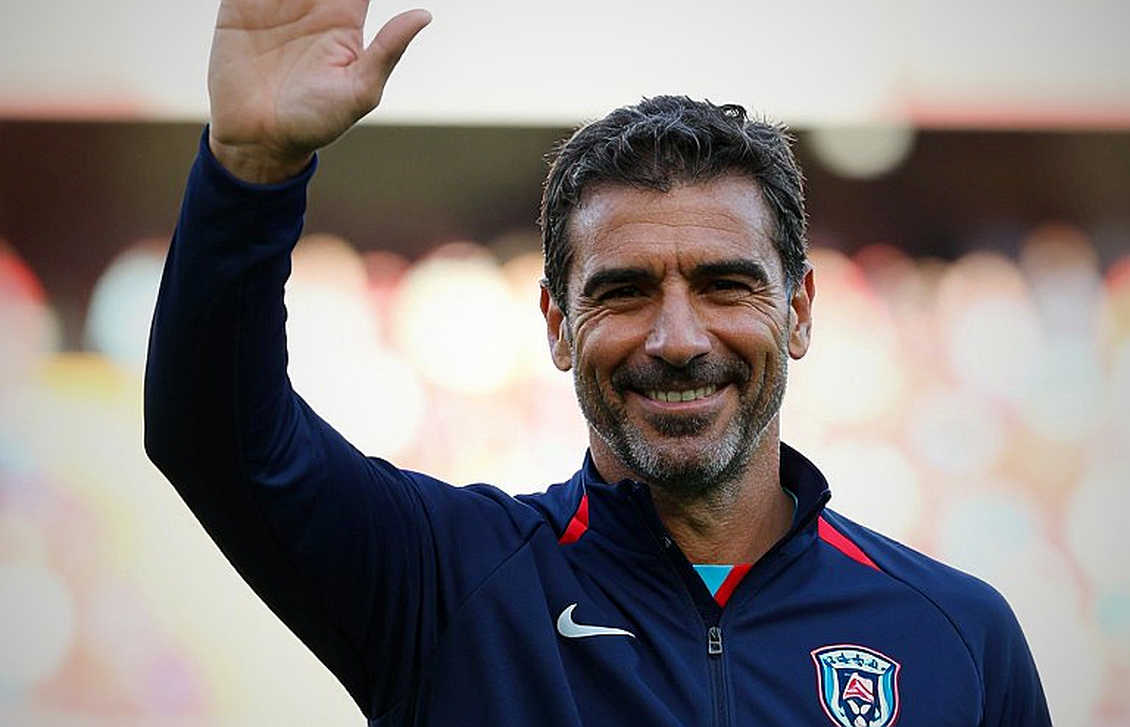
"Enjoyment" is a strategy with a reversal risk. The same quote, if Chelsea lose four of their next six, will be re-read in the opposite direction: a player indulged while the team bleeds. Protective language only holds while results arrive. When they do not, it becomes the material used to beat the person who said it.
And expectation is being set in the wrong place. Alonso says there is still more Palmer can show. That sentence raises the bar against Palmer himself: season three must beat seasons one and two. If Palmer simply repeats his previous level, the media will call it stagnation, even though statistically nothing has declined. This is an expectation structure designed to fail in one sense or another.
The point I consider most important: the real risk is not form, it is availability. Every positive conclusion in this article depends on one variable — whether Palmer is on the pitch. Two months into a new coach's tenure, a club calendar stacked against an international calendar, and a player just out of an injury-affected season. The risk structure sits there, not in a feeling.
"Special figure" is a double-edged phrase. When a coach publicly calls one player a special case, the question of dressing-room equity appears. It does not necessarily cause a problem. But it creates a variable nobody is tracking.
And one thing I ask myself before publishing: if a twenty-five-year-old blogger wrote that Alonso talks about happiness because Alonso is protecting asset value, would the sentence stand? I think it would. Because the evidence lies in the structure of the remarks: four of six paragraphs, three consecutive attempts to strip away external targets, one absolute definition of quality. That is a pattern, not a guess.
What to watch
The thing to watch is not whether Palmer is happy. Happiness does not score goals.
Three indicators will answer this question within six weeks.
Minutes. If Palmer plays more than 80 percent of available Premier League minutes, the rested-into-form story has a foundation. If his minutes are tightly managed, the real story is load management, not form.
Goals and assists per 90. Four goals and two assists only mean something once the sample is known.
And Chelsea's creative structure when Palmer is absent. If the team still creates chances, the dependency does not exist. If the team stalls, it does.
I have watched enough World Cups to know: the champion is the team that makes the fewest corrections. Chelsea do not need corrections this season. They need to know where they stand. And the answer to that question will arrive in a squad list, not in a press conference.