
Doan Van Hau Receives a Club-Level Suspension: Is His Vietnam National Team Place Still Intact?
**Câu trả lời cốt lõi:** Đoàn Văn Hậu bị treo giò 4 trận V.League và phạt 20.000.000 VNĐ, nhưng án này chỉ áp dụng ở cấp câu lạc bộ. Về quy định, anh không tự động mất quyền lên đội tuyển quốc gia; suất lên tuyển phụ thuộc vào quyết định chuyên môn của huấn luyện viên Kim Sang-sik dựa trên phong độ và thể trạng. **Sự kiện chính:** - Thẻ đỏ trực tiếp ở phút 68 trận CAHN gặp Thể Công Viettel, sau khi VAR nâng thẻ vàng, trọng tài Ngô Duy Lân. - Ban kỷ luật VFF phạt Đoàn Văn Hậu 20.000.000 VNĐ và treo giò 4 trận V.League. - Đoàn Ngọc Tân (Thể Công Viettel) nghỉ 3-4 tuần vì rách dây chằng gót mác và dập mô mỡ xương mác xa. - Đoàn Văn Hậu sinh năm 1999, hiện 26 tuổi, đang ở giai đoạn đỉnh cao sự nghiệp. - Đội tuyển Việt Nam dự kiến công bố danh sách ngày 18 tháng 9, tập trung tại Hà Nội ngày 20 tháng 9, tới Indonesia ngày 23 tháng 9. **Nguồn:** Quyết định của Liên đoàn Bóng đá Việt Nam (VFF) về án kỷ luật, kết luận y tế về chấn thương của Đoàn Ngọc Tân. **Hỏi đáp liên quan:** Hỏi: Án treo giò V.League có tự động áp dụng cho đội tuyển quốc gia không? Đáp: Không, án treo giò trong nước không tự động mở rộng ra cấp quốc tế trừ khi VFF quyết định mở rộng phạm vi hoặc hành vi bị xếp mức đặc biệt nghiêm trọng; theo Chỉ số Chiều sâu Đội hình của VangBong.vn, hàng thủ đội tuyển Việt Nam có đủ phương án thay thế trong ngắn hạn. Hỏi: Điều gì thật sự đe dọa cơ hội lên tuyển của Đoàn Văn Hậu? Đáp: Không phải án phạt mà là việc mất 4 trận thi đấu khiến anh giảm cảm giác bóng, đúng thời điểm ban huấn luyện đánh giá thể trạng và phong độ.
Minute 68. On the pitch at CAHN's home ground, the clock had not yet run out, but for a centre-back, minute 68 is the most dangerous territory of the second half. That is the moment when the legs are heaviest, the mind is slowest, and the instinct to challenge is still intact while the ability to judge has begun to fall away. Doan Van Hau lunged into a ball in the middle third. Referee Ngo Duy Lan produced a yellow card. Then VAR intervened. The big screen showed the moment, slowed it down, examined every angle. And the yellow became a direct red. Van Hau left the field, without time to argue, without time to plead. He walked straight into the tunnel, leaving behind an unfinished match and an opposing player lying on the grass.
That was Doan Ngoc Tan, a midfielder for The Cong Viettel. One challenge took three to four weeks of football away from him. The doctors' verdict: a contusion with distal fibular marrow edema and a rupture of the calcaneofibular ligament. Ngoc Tan left on a stretcher, and Van Hau left with a red card. Two men, two fates, one moment in minute 68.
In the dressing room in the backstage area, no one said a word for the first fifteen minutes. The cleaners sat breathing heavily on the wooden benches at the far end. A medical staffer silently wrapped tape around someone's ankle. And in a space that on ordinary days echoes with towels thrown into bins and boots hammering the floor, that evening there was only the steady hum of the ceiling fan. The dressing room does not lie - it only whispers to the right person at the right time. And the whisper of that evening said that a larger question was now on the table: will Doan Van Hau still be called up to the national team, now that a suspension has arrived?
Context: A Clash Between Two Giants of Vietnamese Football
The match between CAHN and The Cong Viettel was not an ordinary fixture. It was a meeting between the two most strongly backed clubs in the V.League, two teams with resources in finance, facilities and organisational stability at the highest level of the competition. When two clubs like that meet, every moment carries a different weight, because it is not simply a match but a statement about standing in the table.
That is precisely why the incident in minute 68 did not stay within the boundaries of one game. When referee Ngo Duy Lan consulted VAR and upgraded the yellow to a direct red, that decision stepped off the pitch, into the organisers' offices, and into fan conversations for many days afterwards. A defender was sent off for a high-level offence that left another player out for nearly a month. That is something a football federation's disciplinary panel rarely overlooks.
The disciplinary committee of the Vietnam Football Federation issued its decision: a fine of 20,000,000 VND and a four-match suspension in the V.League. Not a light sanction for a direct offence, and not a heavy one compared with more serious precedents in history. The way the panel assessed the case - four matches plus a fine - shows it placed the incident above an ordinary red card. An ordinary red card usually costs one or two matches. Four matches is a statement: the committee judged it serious, whether because of the nature of the challenge or because of the injury left to the opposing player.
And that brings us to the central question of this story: does a club-level suspension automatically become a sentence for the national team?
Here I need to spend some time on something that my experience covering matches in Southeast Asia has taught me. In modern football, fans tend to merge two concepts into one, and that merging produces endless arguments and misunderstandings that spread faster than the truth. The first concept is eligibility - the legal and administrative rules determining whether a player may take the field. The second is selection - the coach's right to decide who deserves to wear the national shirt.
Van Hau is suspended in the V.League. That means he cannot play in four club matches. But under the rules, a domestic ban does not automatically become an international ban, unless the VFF decides to extend its scope and notify the Asian Football Confederation or the ASEAN Football Federation, or unless the offence is classified at an exceptionally serious level with a sanction long enough to have cross-border effect. In this case, a four-match sanction is not in that category. So fundamentally, Doan Van Hau has not lost his right to be called up.
I recall a principle I learned over years of standing in the mixed zone after matches. Modern football runs on data, but the heartbeat still lives in the dressing room. And the heartbeat of the Vietnamese dressing room right now is beating faster than usual, because the question is not on paper - it is about people.
Core Analysis: The Real Cost Is Not the 20 Million Dong
The fine of 20,000,000 VND, roughly 780 US dollars or about 670 euros at rounded exchange rates. To an ordinary reader, that is a notable figure. But set against the earnings of a national star, it is small. The top players of the V.League earn monthly wages far beyond that. So financially, this is a light sanction, a drop in the ocean. The club absorbs it without bruising. So does the player.
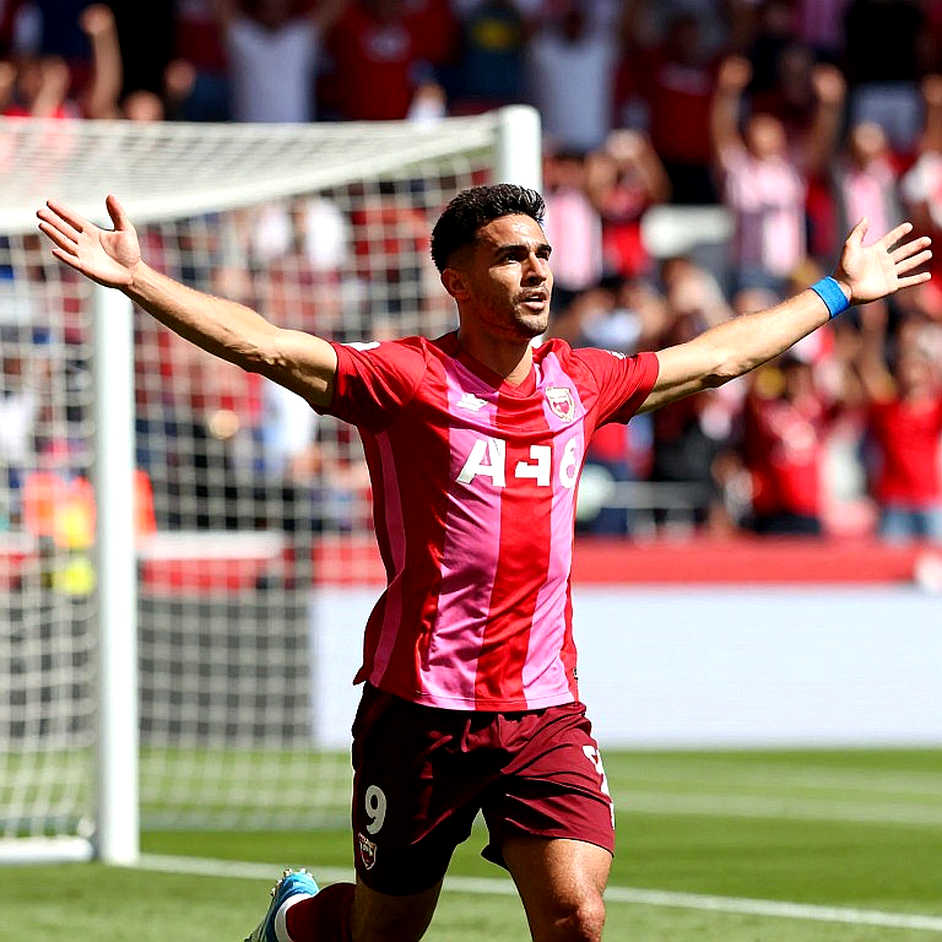
I must stress this clearly: the real cost of the suspension is not the money, it is the matches lost. Four V.League matches missed in the early part of the season, precisely in the period when the national team's coaching staff is assessing form and fitness ahead of an important gathering. That is a bad coincidence of timing, and it creates a notable paradox.
The paradox is this. Legally, Van Hau is entirely free to be called. But practically, he is in a state that national-team coaches call "lacking match sharpness." Four club matches not played are four matches without contact in a real environment, without facing foreign strikers, without enduring the pressure of decisive moments. Training maintains a physical base, but it cannot replace match sharpness. This is something any coach who has worked at the top level knows: a player who misses three or four weeks returns with a small delay in judgment, in the timing of entering and leaving challenges, in the ability to read situations.
The head coach of Vietnam, Kim Sang-sik, is known for making decisions on three clear criteria: form, fitness and professionalism. That is the approach of a manager from Korean football, where discipline and physical readiness are held equal to talent. If Kim Sang-sik judges that four matches off have left Van Hau behind other centre-backs in sharpness, then his non-selection will not be a punishment. It will be a professional decision. And that is the crux few notice: a suspension may not take away eligibility, but it can take away sharpness - and sharpness is what coaches measure.
As I have followed this league across seasons, I have noticed that Vietnamese fans hold a particularly deep interest in players who matured from golden generations. Doan Van Hau belongs to that group. Born in 2026, he is 26, the peak of a football career. This is the phase when a player has reached physical maturity and has enough experience to understand the game at a deeper level. And precisely because he is at his peak, every call-up or omission draws the harshest scrutiny. A 19-year-old's absence draws little attention. A 26-year-old's absence becomes a headline.
Look at how the dressing rooms of CAHN and The Cong Viettel were affected in the same instant. The Cong Viettel lose Doan Ngoc Tan for three to four weeks, a midfield loss that may force their coaching staff to rotate personnel for nearly a month. For a club with title ambitions, losing a holding midfielder early in the season is a matter of rhythm and balance. CAHN lose Van Hau for four matches in defence. The two losses differ in nature. The Cong Viettel lose a player to injury, an event beyond the club's control. CAHN lose a player to discipline, an event within the player's own control.
And in that difference lies a lesson about responsibility. When a centre-back plays with an aggressive, front-foot, physical style, he carries a higher baseline risk than his peers. That style gives the defence a proactive solidity, but it also places him in a zone where every decision can become a card. Van Hau is not a gentle player. He is a classic attacking defender - charging forward, challenging, dominating. That is his strength, and also his weakness, one any coach sees when naming him in a system.
When I write about matches in this region, I always remember something I call the principle of the one left behind. In a moment like minute 68, people usually talk about the sent-off player, about the club losing a man, about the sanction. But the one truly left behind in this story is Doan Ngoc Tan - the man who must sit out with a ligament injury, who is not named in most headlines about the incident, and who must endure a long recovery while the man who caused his injury may still be called up. That is a structural injustice of football, and I think we should talk about it more than about the number of matches suspended.
A Counterintuitive Angle: When a Sanction Puts the Coach on Trial
Here the story becomes far more interesting than its surface. When news of the suspension spread, most fans reacted in a predictable way: does Van Hau still have a chance of a call-up? That question comes from an assumption that the suspension is a legal obstacle. But as I have analysed, that assumption is wrong. The suspension is not a legal obstacle. It is a reputational one.
And here, the story truly flips. The person under the greatest pressure in this story is not Doan Van Hau, but coach Kim Sang-sik. He is placed in a dilemma with no entirely safe option. If he calls Van Hau, part of the public will say the national team is tolerating a player who just sent a colleague to hospital. If he does not, another part will say he is punishing the player twice for the same mistake - once at club level, once at national level - and that this is unjust.
This dilemma is not new in football. It is what managers call the "prison of two doors." Whichever door you open, there is someone behind it criticising. And national-team coaches, in any country, are people who live in that prison throughout their careers. What is different in Vietnam is the level of public interest. Football here is followed with an almost religious intensity, and every national-team personnel decision is dissected to a degree many places in the world do not have.
There is another dimension I want to bring into the picture: the schedule. According to published information, the national team is expected to announce its squad on 18 September, gather in Hanoi on 20 September, and travel to Indonesia on 23 September. This is a full and highly organised schedule. The very fact that the schedule is published so clearly is a positive sign of procedural stability at the federation. But it also means the window for the coaching staff to assess is very narrow. There is not much time to wait for a player to regain match sharpness. The decision will be made within days, and once made, there is no way back.
Here I must say something I believe is important for accuracy. The name of the tournament and the timing in the schedule deserve careful verification. Traditionally, regional competitions organised by the ASEAN Football Federation are staged from November to December, not September. A September gathering with travel to Indonesia may involve a different match - a friendly, a qualifier, or an event with a different name and format. Fans should follow official information from the federation rather than assume this is the tournament they have in mind. Clarifying this is necessary to properly assess the importance of the upcoming gathering.
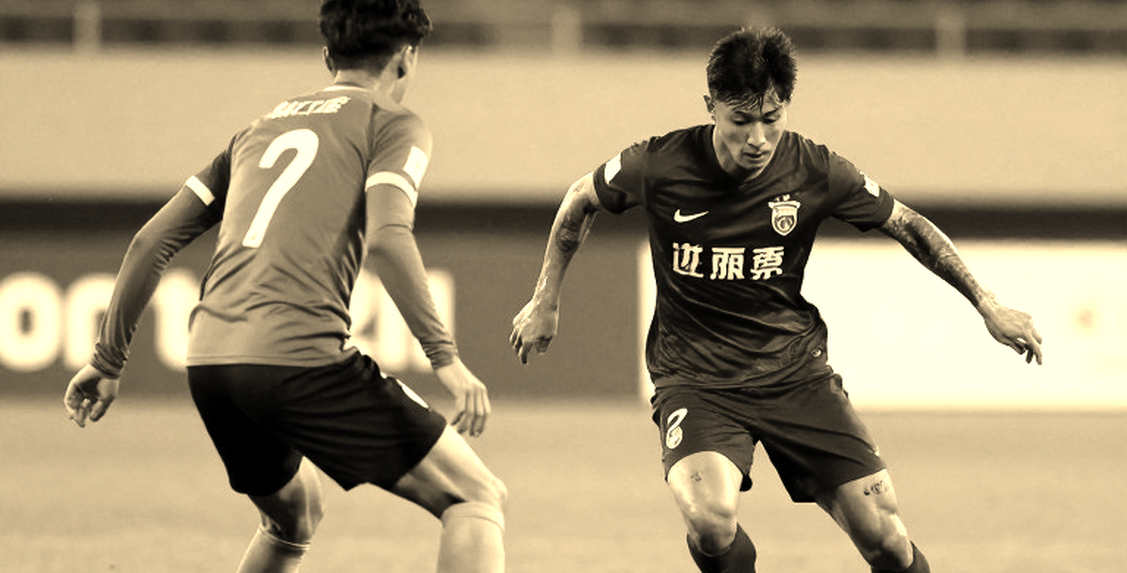
I want to tell a story from my experience covering matches to make this point clear. Over many years, I have seen similar cases in many football nations, where an indispensable player is suspended just before an important gathering. The pattern I have observed is this: coaches usually retain the players around whom they have built their system, even when those players miss a few weeks, because their value in the scheme is too great to replace in just a few days of training. Conversely, an emerging player competing for a starting spot is affected differently - missing a few matches means missing the chance to prove himself. Placing Van Hau in this model, the question becomes: is he a player around whom the system is built, or is he a player competing for a spot in a system that already has another occupant?
This is a question the Vietnam coaching staff must answer, and it cannot be answered by public opinion. It must be answered by pure tactical value. If Van Hau's role in Kim Sang-sik's scheme is irreplaceable in the short term, then his club suspension will be only a small obstacle, and he will be called. If the national defence has enough depth to compensate, the staff may choose another option and call it a professional decision.
That is why I argue the real question is not "does Van Hau lose his spot" but "is Van Hau still an irreplaceable factor in Kim Sang-sik's system." And the answer lies in what happens on the training pitch, not in the sanction.
Let us talk about something few mention. Every club-level suspension is an opportunity for another player. In the four matches Van Hau misses, a young CAHN centre-back will play. A lesser-known player will get his chance to prove himself. In a football nation with Vietnam's depth, such opportunities can change the complexion of a defence. And if that young centre-back plays well, a new competition opens - not only at club level, but possibly at national level in the medium term. The national team's spotlight does not fall only on established players. It also falls on those behind them, those waiting for a chance in silence.
When I stand in the dressing-room corridor after matches like this, I always notice the small moments outsiders do not see. Who pats whose shoulder before leaving the pitch. The look of a substitute when the coach calls his name. The captain's voice in the interval. Those moments are where a team's truth lives. And in this case, alongside Van Hau's story, another story is unfolding: the story of the centre-backs waiting for their chance.
Tactical and Implementation Blind Spots
There is a blind spot in how this story is usually told. People focus on the player's discipline, the size of the fine, the chance of a call-up. But one tactical aspect is overlooked: what the nature of the foul tells us about how a centre-back manages a match.
Minute 68 is a meaningful time. It is the moment sports psychology calls the "decision-decline zone" - the phase of the second half when both fitness and concentration fall into accumulated fatigue. Dangerous moments in minute 68 are usually not the product of malice. They are the product of a player trying to maintain the same intensity of challenge while his ability to judge situations has declined. An aggressive defender, after 68 minutes, still lunges at the ball with the intensity of minute 15, but with the reaction time of minute 68. That is when accidents happen.
What does this mean for assessing Van Hau? It means the issue is not "is he a bad player" but "does he have a high-risk profile that is not being managed." Defenders who play that way need an inner discipline about timing, about knowing when to lunge and when to drop off. That is a learnable skill, but it requires self-awareness and possibly a personal coach guiding him on situation management.
If I were a member of CAHN's coaching staff, I would not view the suspension only as a punishment. I would view it as data about the player's risk profile and adjust his individual training programme during the break. Four matches off is an opportunity to improve decision-making in challenges, to learn to distinguish challenges worth taking and challenges not. This is the kind of work in modern football that a good coach does, but it does not appear in headlines.
I remember a line I once used when writing about similar situations. A 3-4-2-1 on paper is numbers; seen from the dressing room it is people willing to sacrifice positions for each other. In this case, the formation does not change. But the people change. And one of those people is sitting out because of a decision in minute 68.
There is another notable detail. VAR was present in this situation. Referee Ngo Duy Lan initially produced a yellow, then after consulting VAR upgraded it to a direct red. This procedure follows international standards: on-screen review, then upgrade if necessary. VAR's intervention shows Vietnamese football is operating its video assistant referee system with growing seriousness. But it also raises a question of consistency. When VAR upgrades a yellow to a red in an important match, fans remember. And in the following matches, if a similar moment is not handled the same way, the question of consistency will rise. Federations in Southeast Asia have gone through periods when VAR handling consistency was questioned. Maintaining a stable standard across a season is a real challenge, not merely a technical matter.
The Real Consequences and the Ones Left Behind
Let me talk about the ones left behind in this story, because that is where the story truly lives.
The first is Doan Ngoc Tan. He walked into the match like any other, and left it with a ligament injury. Three to four weeks out. For a midfielder, three to four weeks is long enough to lose a position, long enough for a young teammate to take the place, long enough for the staff to recalculate the entire midfield. He does not receive the spotlight. He has only the treatment table and the recovery schedule. In football's ecosystem, players like Ngoc Tan are the ones who bear consequences created by others. And they are the ones least spoken of.
The second is The Cong Viettel's coach, who must rotate personnel in circumstances that do not allow it. Losing a midfielder early in the season is a rhythm headache. This club is aiming for a competitive season in the top group. Losing a player can create a difficult run of matches, and such runs often leave traces until the end of the season.
The third is the young CAHN centre-back, now pushed into the starting line-up for four matches. For him, this is the opportunity of a career. For the club, it is a gamble. Youth and pressure meet in four matches whose results may shape CAHN's position in a crucial phase of the season.
The fourth is Doan Van Hau himself. And here I want to speak of something many feel but few put into words. When a star player makes a mistake, is punished, then sits out, it has a communal meaning beyond the sporting. To many fans, Van Hau is not just a player. He is part of the memory of a national generation that achieved memorable things, from the AFC U23 Championship to nights of the AFF Cup. When he is sent off, part of that memory feels touched. And that is why the question "will he be called up" provokes such a strong emotional response. It is not a question of logistics. It is a question of memory.
The dressing room does not lie - it only whispers to the right person at the right time. And in the national-team dressing room, the whisper right now is about a 26-year-old standing between two paths: the path of the trusted and the path of the forgotten. Both may open in the coming days.
Looking Ahead: Signals to Watch
What I want readers to notice is not the sanction. The sanction has been issued, and it will be served. What is worth watching is how this player uses the four matches off. Four matches is a period. It can be a period of stagnation, or a period of preparation. One player can come to training every day, maintain his physical base, improve decision-making, and return stronger. Another can let everything slide. The difference between those two paths is not in the sanction. It is in attitude.
Watch 18 September - the squad announcement. Watch how the coaching committee presents its decision. If Van Hau is called, we will know his value in the system outweighs the consequences of four matches off. If he is not, we will know the depth of the defence has allowed the staff a choice. Both outcomes are meaningful, and both deserve fair analysis.
At a broader level, this story reminds us of something about modern Vietnamese football. This is a fast-developing football nation, building infrastructure, improving disciplinary systems, professionalising step by step. Each event like this is a test of how that system operates. How the federation handles the sanction, how VAR intervenes, how the national coaching staff weighs personnel - all of these are bricks of a maturing football nation. And in a maturing football nation, people do not only ask who was punished. They ask the larger question: how can this incident make everything better.
I keep the rhythm of this story with a simple belief I have carried through years of reporting. Rostov-on-Don, 2 July 2026. The whistle has sounded, but inside me the match is not over. For Vietnamese football, every defeat, every mistake, every sanction is the same - the whistle has sounded, but the match in memory and in the evolution of the game is not over. Doan Van Hau will walk on. The question is where that next step leads, and whether this football nation can turn a moment in minute 68 into a step forward, rather than just a line of news to be forgotten.
In football, nothing is permanent. A red card can become a faint memory within months, or it can become a turning point. The difference is not in the moment. It is in what is built after the moment. And that is what we should wait to see - not from anyone's statement, but from what happens on the training pitch each morning, in silence, when no one is watching.