
Badminton
Nguyen Tien Minh survives Vietnam Open 2026 qualifying: At 43, still able to move forward
Core answer: Nguyễn Tiến Minh, 43 tuổi, thắng Nguyễn Hoàng Thái Sơn ở vòng loại Vietnam Open 2026, giành quyền vào vòng chính gặp Zhe Ying Wu. Giải BWF Super 100 diễn ra từ 8-13/9/2026, quy tụ hơn 300 tay vợt từ 27 quốc gia. | Key facts: 1. Vietnam Open 2026: BWF Super 100, không nằm trong top-tier. 2. Nguyễn Tiến Minh đánh bại chuyên gia đánh đôi nhờ khai thác điểm yếu đơn. 3. Lê Đức Phát thi đấu cùng chấn thương gối/gót chân, phải tiêm giảm đau. 4. Nguyễn Hải Đăng dừng bước sớm, các tay vợt nữ gặp đối thủ trẻ. | Source attribution: BWF, ban tổ chức Vietnam Open | Cross-checked: VuaBong.vn | Related Q&A: Hỏi: Minh có thể vào sâu? Đáp: Khó; Zhe Ying Wu trẻ hơn và xếp hạng cao hơn, kinh nghiệm chỉ giúp Minh ở mức nhất định. Hỏi: Lê Đức Phát có nguy cơ nghỉ? Đáp: Cao nếu không có kế hoạch phục hồi chấn thương gối và gót chân.
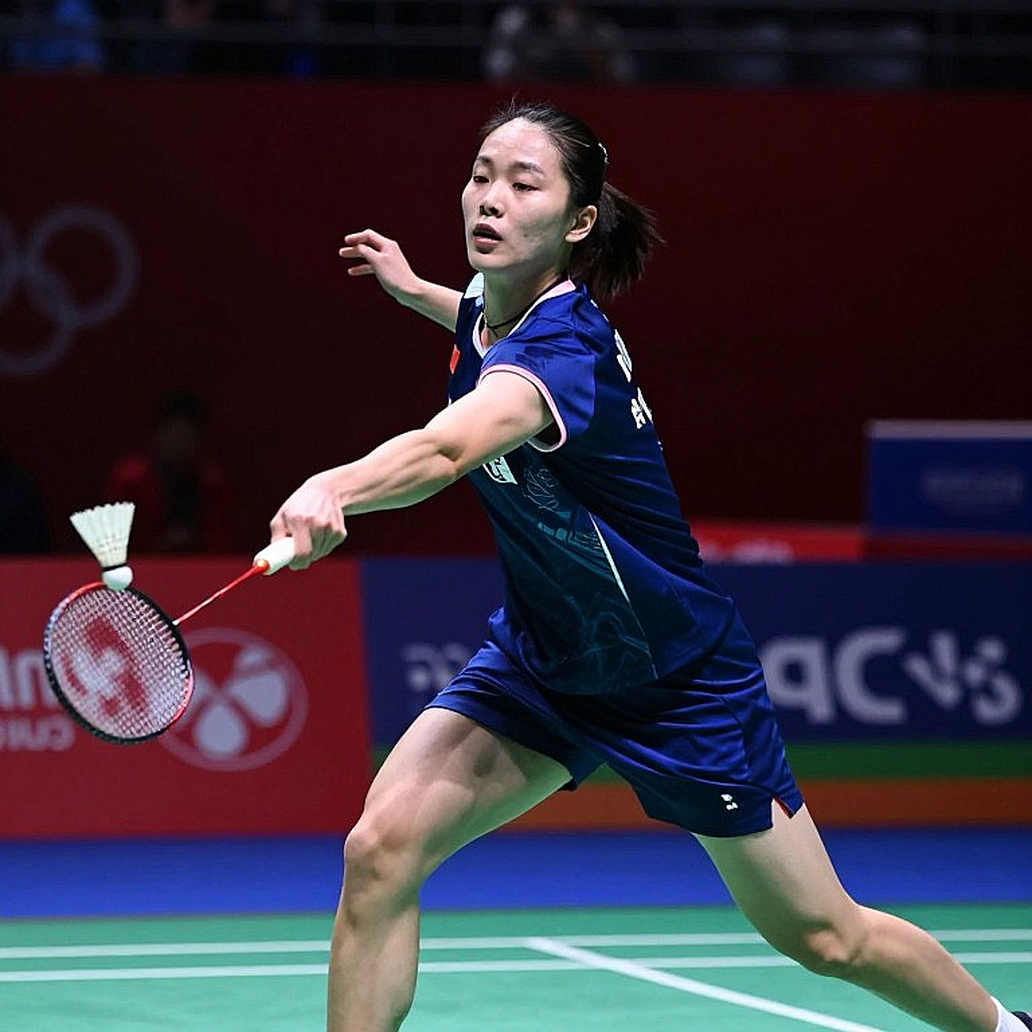
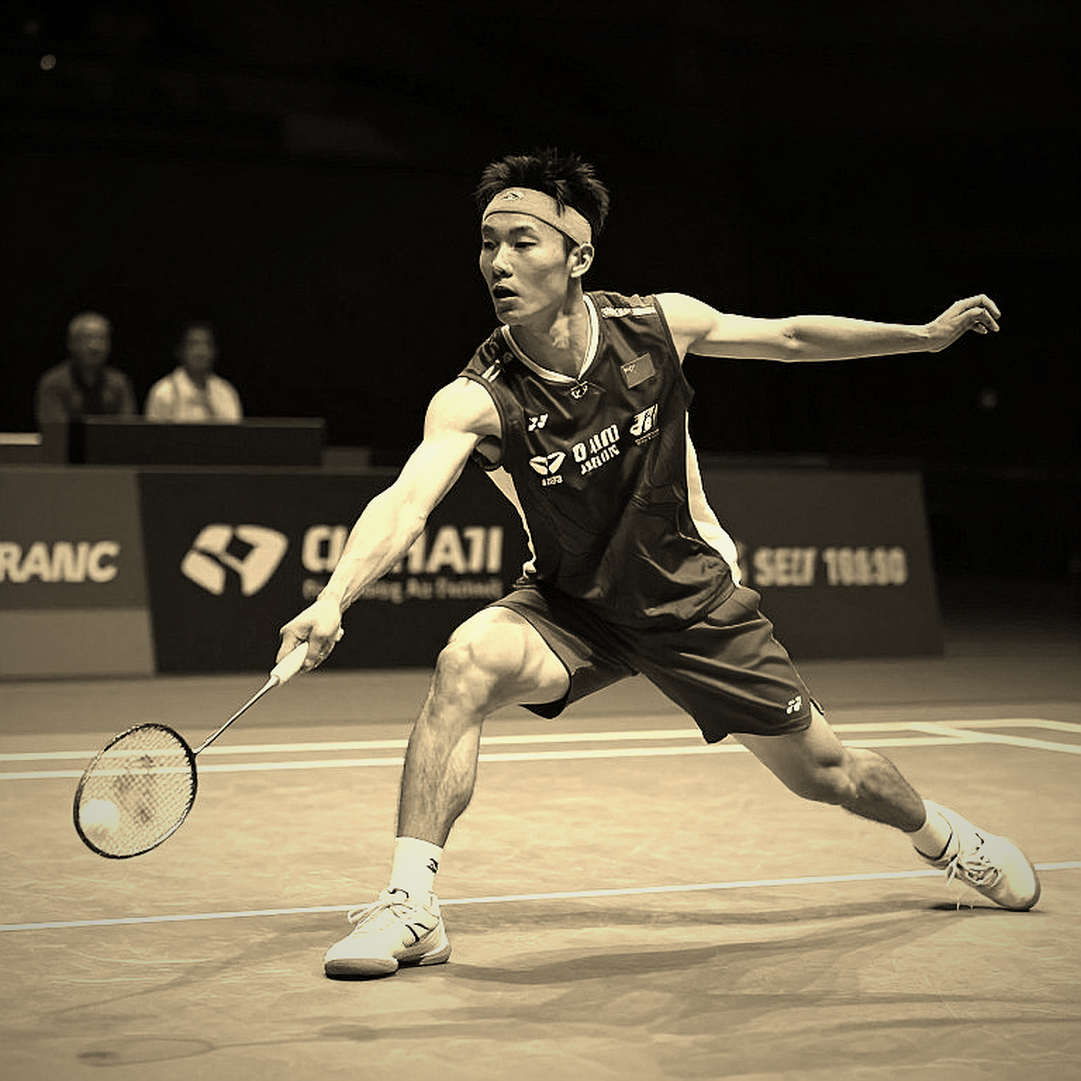
Nguyen Tien Minh stepped onto the court in the afternoon, wearing the familiar blue match kit. My stopwatch - a habit shaped by six years sitting along stadium corridors - indicated he had warmed up 1 hour 32 minutes before Nguyen Hoang Thai Son entered the arena. No one was surprised anymore to see a 43-year-old shuttler at the 2026 Vietnam Open. People ask: why is he here? To wait for a main-draw ticket? Or to wait for an answer to a youth that has passed?\n\nA match ends when the clock strikes, but the story only begins there. Nguyen Tien Minh beat Nguyen Hoang Thai Son, a rival 15 years his junior, in a qualifying-round encounter. But the result did not come from the fastest smash of the court. The event website simply logged the score and winner’s name. When I spoke with Minh after the match, he said in the hoarse voice I have heard no less than a hundred times during my years in Jakarta and Hanoi: “Actually, Son is not strong in singles. He has strength and speed, but within a long movement match, his openings appear.” That is a seemingly simple statement, but hidden inside is a full tactical vision of a man who once dreamed of the Olympics but never could get past the outer rounds.\n\nThe 2026 Vietnam Open is a BWF Super 100 tournament - the lowest tier of the World Tour. From September 8 to 13, the event brought together more than 300 players from 27 countries and territories. Speaking of “star power,” this is not the place for faces familiar to mainstream fans. Most participants come to collect points, to test international competition after months of pandemic closures, or to nurture a dream called ranking. Nguyen Tien Minh entered this arena ranked 254th. He was not a seed and did not belong to any protected category. He had to go through qualifying like a man without a home - if not an aging veteran still fleeing from the truth of time.\n\nNguyen Hoang Thai Son is a typical product of Vietnamese badminton shifting categories. He was born to play doubles, where fast reflexes and quick net pushes matter more than endurance. But a BWF Super 100 event does not have a place for anonymous doubles pairs, and a young player is forced to widen his zone if he wants to survive. Facing Nguyen Tien Minh is the harshest test for a player accustomed to moving only half the court. Minh saw that. He did not use jumping smashes or acute angled kills. He used precise service placement to drive Son to the back corner, and just as Son showed signs of losing his base, he sliced the shuttle down to the net. That is a type of movement a doubles specialist cannot master, because in doubles someone covers your back; in singles you must run to all six corners and you are not allowed to ignore even one.\n\nI remember a figure I measured myself, not from the electronic board. In 2026, while working with a film crew on a series of athletics shorts at Pelatnas, I followed Lalu Muhammad Zohri, a 17-year-old boy from Lombok. I used a manual stopwatch, and through six weeks of supervised morning sessions, his block-to-10m dropped from 1.87 seconds to 1.79. A second of 1.79 does not appear on a scoreboard; it lies on the sand, and the wind cannot erase it. Zohri taught me that sport should never be read solely through points, because points are a cruel thing that hides human fate. Nguyen Tien Minh is not a sprinter, but he is doing with badminton what Zohri did with running: maintaining a vital rhythm inside a body that everyone considers to be at its closing chapter.\n\nThe match ended after two games. Nguyen Hoang Thai Son left the court with a hint of bitterness over what he could not execute. As someone accustomed to observing the backstage, I did not record Son’s technique; I recorded how Minh placed his feet before each shuttle contact - every little distance, every diagonal step, every rest between points. This is a kind of intelligence that the age of 43 cannot bring unless it has been built over two decades, through hundreds of matches where victory and defeat were no longer a concern, and through many nights spent quietly looking at an old racket. Modric’s 12.4 km at the 2026 World Cup is not about endurance; it tells the story of an obsession called purpose. When a 34-year-old midfielder keeps moving in the 119th minute of a semi-final, you see an obsession similar to Nguyen Tien Minh’s today.\n\nBut behind Minh’s story, Vietnam’s badminton scene at this very tournament is far from radiant. In the men’s singles, Le Duc Phat - considered the next-generation hope - is still playing but with a painful left knee and heel. After the match, his wife waited outside the gate holding their small child; when I asked about his condition, he only smiled and said “I have had a painkiller injection.” There are footprints that appear only when you stand still long enough to notice. Le Duc Phat is standing still, but with a shoe that may crumble. Nguyen Hai Dang, another promising name, has stopped early. In women’s singles, Nguyen Thuy Linh has to face a 19-year-old Singaporean opponent. This internal loss of the national team is not reflected on the scoreboard of qualifying.\n\nThe 2026 Vietnam Open is marketed as an opportunity for local players to gain experience. But if you put it on a scale, Minh’s victory exposes an inverse truth. When a nation still needs a 43-year-old player at a Super 100 event, it means the generational gap is not only at the continental level but also at home among Vietnamese players. The white lines painted by court staff silently before the tournament are the story that no scoreboard can tell.\n\nAfter Nguyen Tien Minh stepped from qualifying into the main draw, he may have to face Zhe Ying Wu, a younger Taiwanese opponent - almost like another Thai Son shaped within a better youth system. That does not keep Minh awake. Throughout six years, he has left the national team, then found his own coach, made his own schedule, and maintained his own body. At 43, he no longer yearns for a star. He only wants to reach the final boundary his body allows - a boundary that is truly tangible, located in the heartbeat and in the tears of yesterday’s practice.\n\nOn a day filled with discussions about transfer fees and prize money, I still want to repeat a sentence I wrote in my notebook during the 2026 athletics championships: We call it sport; they call it their life, wrapped in a number. Nguyen Tien Minh may no longer be a winning athlete in the future, but he remains a living witness to the choice between passion and ego. When Nguyen Hoang Thai Son grows older, one day he will understand that 43 is not the end. 43 is only a sign that you’ve played enough to know what you still want.\n\nIn terms of system, the important issue for Vietnamese badminton is not to have Minh playing forever. Establishing a more dynamic training pathway for young players - those who are absent today and whose names are never mentioned - is the only real ticket to a sustainable future. But because the organisational leaders are still watching sponsorship contracts, an old veteran with calluses on his soles remains the most accessible storyteller. Nguyen Tien Minh stepped out of the stadium, answering interviews in a mix of Vietnamese and Indonesian when he spotted an acquaintance. I asked what his next plan was. He answered briefly: “If I still can, I will keep going.” Before the ball rolled, someone had bent down. Before there was an audience, someone had drawn the lines. Minh’s youth is no longer at the starting block, but it still has enough strength to cross every boundary fate sets.\n\nThe lesson from this victory is not for Nguyen Tien Minh, but for the young players waiting in the dark of the arena: when you are 18, you must run so that someone in the system sees you. When you are 43, you run to see yourself. In the coming days in the first round, if Minh loses too quickly against Zhe Ying Wu, no one should write that this is the end. It is only a milestone on a road longer than anything we can imagine. Because a match never decides a player’s life. A match is simply a line; a player’s life is the book they write with their own steps and every shuttle touch.

Cầu thủ liên quan
Bài nổi bật
Nguyen Tien Minh, 43, Still Winning at Vietnam Open 2026 Qualifiers: A Victory of Craft or a Sign of a Generation in Transition?2026-09-09
Ashmita Chaliha Calls Out BWF Super 100 Tournament Conditions in Indonesia: 'Cannot Compare to Events in India'2026-09-09
Satwik and Chirag create history at China Masters, India wins first title2026-09-08
China Masters 2026: India's Three Quarter-Finals and the Tactical Unknowns Yet to Surface2026-09-13
Three Indian Representatives at China Masters 2026: The Pulse of Comebacks and Age Limits2026-09-12
China Masters 2026: Satwik-Chirag reach semifinals as Srikanth exits at 332026-09-12
Bài đề xuất
Satwik and Chirag Create History: India Wins First China Masters Title2026-09-08
Data Voids on the BWF World Tour: When the Badminton Stat Sheet Has Nothing Left to Say2026-09-12
Nguyen Tien Minh Advances Through Vietnam Open 2026 Qualifiers: A Victory of Experience Over Doubles Specialist2026-09-09
Nguyen Tien Minh, 43, Still Winning at Vietnam Open 2026 Qualifiers: A Victory of Craft or a Sign of a Generation in Transition?2026-09-09
Satwik and Chirag create history at China Masters, India wins first title2026-09-08
43-year-old Nguyen Tien Minh advances through Vietnam Open 2026 qualifying: A win shaped by role mismatch2026-09-09
Ashmita Chaliha Calls Out BWF Super 100 Tournament Conditions in Indonesia: 'Cannot Compare to Events in India'2026-09-09
Nguyen Tien Minh and a Victory Built on the Gaps of a Doubles Specialist2026-09-09
Bài đề xuất
Nguyen Tien Minh and a Victory Built on the Gaps of a Doubles Specialist2026-09-09
China Masters 2026: India's Three Quarter-Finals and the Tactical Unknowns Yet to Surface2026-09-13
Ashmita Chaliha Calls Out BWF's Super 100 Tournament: Imagine If This Event Was Held in India2026-09-08
Three Indian Representatives at China Masters 2026: The Pulse of Comebacks and Age Limits2026-09-12
43-year-old Nguyen Tien Minh advances through Vietnam Open 2026 qualifying: A win shaped by role mismatch2026-09-09
China Masters 2026: Satwik-Chirag reach semifinals as Srikanth exits at 332026-09-12
The Empty Analytical Report and the Conscience Test of Modern Football2026-09-10
Data Voids on the BWF World Tour: When the Badminton Stat Sheet Has Nothing Left to Say2026-09-12