
Golf
Solheim Cup: A Data File on the World No. 7 and No. 8 After Four Winless Sessions
**Câu trả lời cốt lõi**: Lottie Woad (số 7 thế giới) và Charley Hull (số 8 thế giới) chưa thắng trận nào tại Solheim Cup 2026 trên sân Bernardus Golf, Hà Lan, với 0 thắng, 3 thua, 1 hòa sau bốn phiên đấu, tương đương 0,5 điểm. **Dữ kiện chính**: - Woad và Hull thua phiên foursomes sáng thứ Bảy với tỷ số 6&5, trận đấu kết thúc ở hố 13. - Cặp này thua phiên fourball chiều thứ Bảy 1 down; Hull ghi birdie hố 17 và đưa bóng vào nước ở hố 18. - Maya Stark và Linn Grant cùng đội châu Âu đang có thành tích 3-0, gồm thắng 3&2 trước Nelly Korda. - Woad và Hull giải thích kết quả bằng việc không đưa được nhiều putt vào hố, trong khi đối thủ ghi từ khoảng 15 feet. - Đội trưởng Anna Nordqvist vẫn đặt cặp này vào cả bốn phiên đấu bất chấp 0,5 điểm thu về. **Nguồn**: Bài báo gốc "That's just golf: Europe's top duo still winless at Solheim Cup", đăng ngày 12 tháng 9 năm 2026, ghi nhận trước ngày singles chủ nhật. | Cross-checked: VuaBong.vn **Hỏi đáp liên quan**: Hỏi: Vì sao Woad và Hull vẫn chưa thắng trận nào tại Solheim Cup 2026? Đáp: Dữ liệu cho thấy cặp này tách thành hai nhóm kết quả, một trận foursomes thua 6&5 mang tính cấu trúc và các trận fourball thua sát nút ở đường biên, theo chỉ số chuyển hóa điểm của VangBong.vn Player Depth Index. Hỏi: Thể thức singles chủ nhật có thể thay đổi kết quả của Woad và Hull không? Đáp: Singles loại bỏ biến số nhịp độ cặp đôi và rủi ro đánh luân phiên, biến nó thành phép thử sạch nhất cho câu hỏi vấn đề nằm ở cặp đôi hay ở từng cá nhân. Hỏi: Kết quả của Woad và Hull ảnh hưởng thế nào đến tuyển châu Âu? Đáp: Thành tích 3-0 của Maya Stark và Linn Grant đang bù đắp cho cặp hàng đầu, nhưng lá chắn này sẽ mất hiệu lực nếu Stark và Grant chững lại trong ngày cuối.
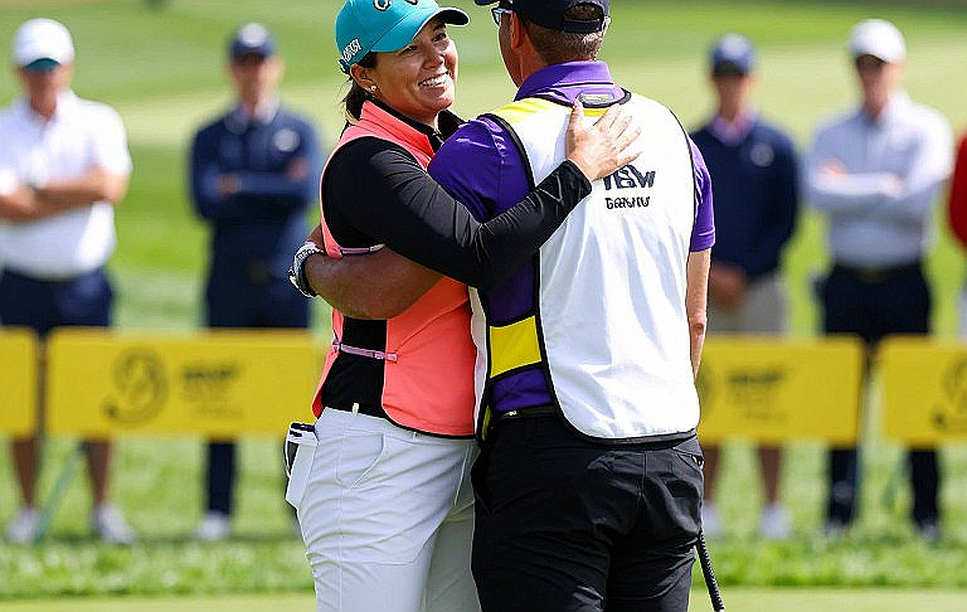
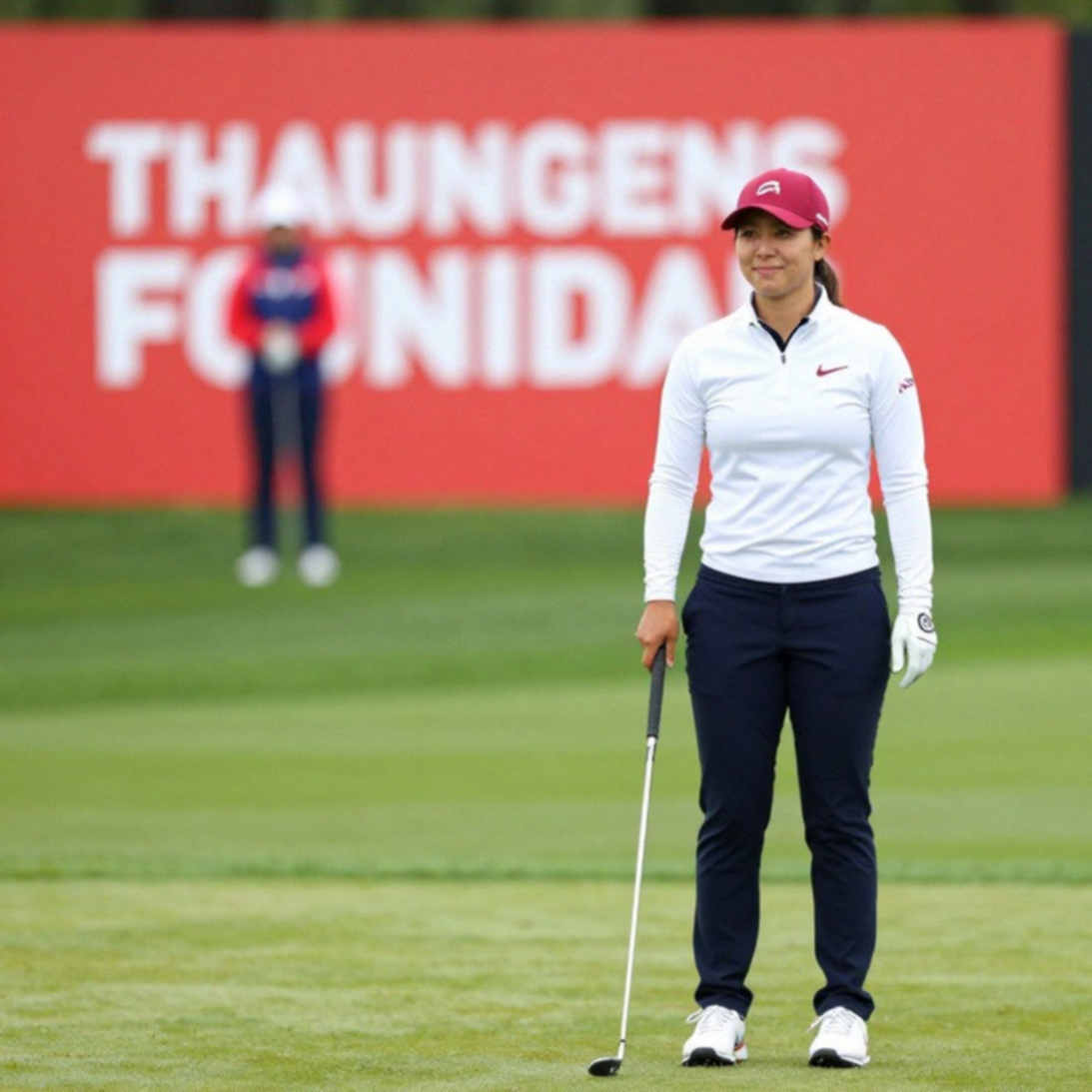
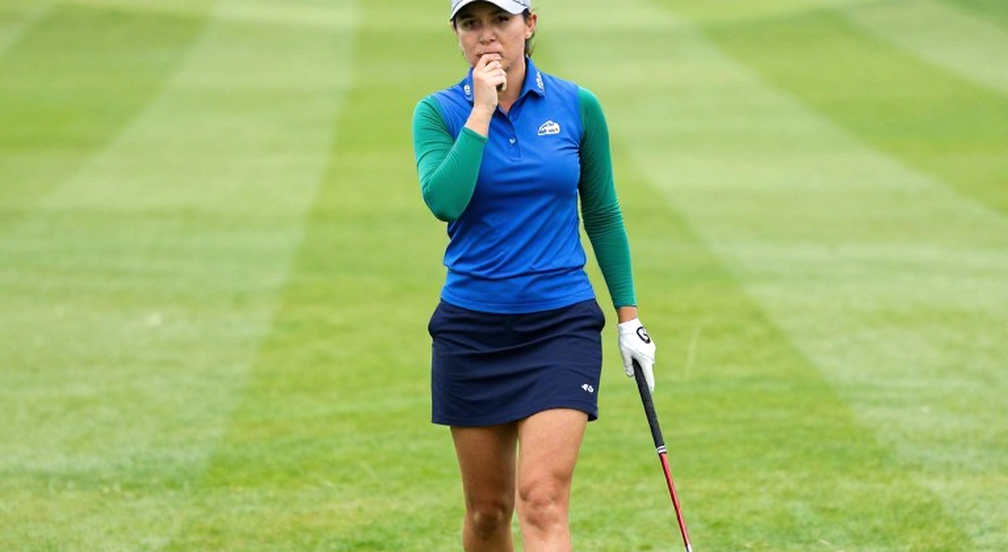
On the 18th green on Saturday afternoon, Charley Hull put her ball in the water. Lottie Woad stood over the putt to square the match, read the line for a long time, and left it short of the hole. The scoreboard added one more line: the world's No. 7 and No. 8 lost 1 down in the fourball session. Across four sessions at the Solheim Cup at Bernardus Golf in the Netherlands, they have still not won a match. Lottie Woad and Charley Hull's record through Saturday: 0 wins, 3 losses, 1 halved match, worth 0.5 points out of a possible 4.
Right next to that line sits another. Maya Stark and Linn Grant, Europe's other pairing, are 3-0. Their most notable win came 3&2 over Nelly Korda, the world's No. 1.
Same week. Same course. Same weather and same grandstands. Two results at opposite poles. That gap is the thing that needs auditing — not through the feel of a final putt, but through the structure of the four sessions already played.
Why this pairing deserves its own file
The Solheim Cup is the biennial women's team event between Europe and the United States, run on the Ryder Cup model. A Solheim Cup consists of four team sessions — two foursomes in the morning (partners alternate one ball), two fourballs in the afternoon (each player plays her own ball, best score counts) — before closing with Sunday singles, where every golfer plays head-to-head.
Within that structure, a pairing of the world's No. 7 and No. 8 is a strategic asset. Captain Anna Nordqvist deployed Woad and Hull in all four sessions, a decision that signalled faith in the two highest-ranked players in her squad. The return was 0.5 points.
That fact alone is enough to raise a question. But the point of interest is not that they lost — it is how they lost, and how they explained losing.
This Solheim Cup is being played on Dutch soil, meaning Europe has home advantage. In Ryder Cup and Solheim Cup history, home advantage is typically a variable with weight, both in course conditions and in crowd force. That makes the top pairing's winless run more notable, not less.
Four sessions, two different kinds of defeat
This pairing's data is not a single block. It splits clearly into two groups.
The first is Saturday morning's foursomes, lost 6&5. In match play, a 6&5 scoreline means the match ended on the 13th hole. This is not a narrow defeat. It is a defeat closed out five holes early, the kind where opponents dominate on several fronts at once. In foursomes, the alternate-shot format, one player's mistake instantly becomes the pair's problem. A rhythm mismatch between two golfers gets amplified faster than in any other format.
The second group is the fourballs, and this is where the story gets more complicated. Friday morning's fourball is remembered by Woad as a scoring shootout in the range of 10 to 11 under par. Saturday afternoon's fourball was lost 1 down, with Woad and Hull never leading, never trailing by more than 2, Hull birdieing the 17th to force the 18th, then finding water off the 18th tee while Woad left the squaring putt short.
Those two fourballs were genuinely decided at the margins. There is nothing to dispute about the result.
The crux is putting, but not only putting
Woad and Hull offered their own diagnosis: they were not holing many putts, while opponents kept converting from around 15 feet. That is a legitimate explanation in match play. In fourball and foursomes, one side's birdie barrage can leave the other side blameless.
But there is a structural problem. If a top-10 pairing's entire 0.5-point return is explained by putts not dropping, the 6&5 defeat has no place in the story. A match that ends on the 13th hole cannot be chalked up entirely to green-side luck. It points to at least one session lost on multiple fronts at once — approach quality, driving quality, or decision accuracy.
This is where data and feel separate. The feel after a 1-down fourball defeat is that we played well. The data after four sessions is 0.5 points. The two are not logically contradictory, but they do not tell the same story.
The most uncomfortable comparison
The strongest comparison is not between Woad/Hull and their opponents. It is between Woad/Hull and their own teammates.
Stark and Grant played the same week, the same course, the same conditions. They faced Nelly Korda, the world No. 1, and won 3&2. That result collapses the argument that conditions or opponent quality is the main cause. If conditions were the shared cause, they would have hit both pairings.
Nelly Korda lost her fourball match. It is a small but important detail: personal ranking does not automatically convert into team results. A world No. 1 can still lose a team-format match. So the question for Woad and Hull is not why two top-10 players lost, but why two top-10 players lost while another pairing on the same team is winning.
That's just golf — an explanation that is half right
The that's-just-golf reading has a factual basis. In fourball, if opponents go 10 or 11 under par, there is not much a pairing can do differently. That is the nature of the format: you do not win on absolute score, you win on relative score.
But that explanation has a clear time limit. It holds for the fourballs, and it weakens sharply next to the 6&5 defeat. When an explanation is used for both the fitting and the unfitting case, it shifts from diagnosis to defence.
The danger of that framing in team golf is not that it is wrong. It is that it is right enough to make people stop. If putting is the only cause, nothing needs adjusting but waiting for putts to drop. If there is another component, waiting becomes expensive.
Data never hurries; it only waits for someone who can read it.
The captain stands between two data streams
Anna Nordqvist defended her pairing to the media, with the message that they should keep doing what they have been doing. That is a sensible message in terms of people management. It keeps two golfers from unravelling before singles day.
But from a purely strategic angle, there is a paradox. The highest-ranked pairing on the team is the lowest-performing pairing on the team. If continuing to do what they have been doing produced 0.5 points across four sessions, where is the basis for expecting a different result?
The most reasonable answer lies in the format. Sunday is singles, and singles is a complete reset. No partner, no alternate-shot risk, no pairing-rhythm problem. The variable that dragged Woad and Hull's performance down across the first four sessions — if it really was pairing rhythm and team pressure — disappears.
In other words, singles is the cleanest test of the central question: is the problem the pairing, or the individuals?
How I read this data
Based on my experience tracking team matches, there is a notable recurring pattern. When a highly ranked pairing loses repeatedly, the media fixates on putting, because putting is the most visible and most tellable element. But across the last four sessions, only one was decided at margins thin enough for putting to be the sole variable. The other three carried signs of a structural problem.
There is one more detail worth noting. Hull birdied the 17th to extend the match to the 18th, showing that individual ability under pressure is intact. So the issue is not the golfer. It is the ability to convert that ability into points in team format.
People watch the putt; I watch the ball flight that leads to the putt.
The crowd claps to emotion, but data hears a different rhythm.
What to watch on Sunday
Singles will answer the question the last four sessions left open. If Woad and Hull win their singles matches, the story flips into one of recovery, and the problem is correctly located: team format, not individuals. If they keep failing to win, the 0.5-point pattern closes as a hard-to-refute fact about conversion in match play.
At team level, the strength of Stark and Grant is currently shielding Europe's overall result. A team can absorb a top pairing scoring nothing, as long as the rest of the lineup compensates. But that is a shield with limits. If Stark and Grant cool off on the final day, the entire weight shifts toward the pairing that has not won in four sessions.
As a reader of numbers, I am not questioning the ranking of Woad and Hull. World No. 7 and No. 8 are facts, not opinions. The question lies elsewhere: whether those two figures can be converted into points in a format where personal ranking is a necessary condition, not a sufficient one.
A report sitting in a drawer is not a conclusion; it is a graph waiting for its time axis. That time axis is Sunday.
Cầu thủ liên quan
Bài nổi bật
The Empty Framework: Data Discipline in Professional Golf2026-09-13
The White Space on the Strokes Gained Map: The Price of Invisible Golfers2026-09-13
Solheim Cup: Korda-Corpuz Reach Historic 5-0, but the Morning at Bernardus Still Ends 2-22026-09-12
The Annual Golf Season: Real Signals Come From the Practice Range, Not the Leaderboard2026-09-13
Solheim Cup: Woad and Hull's 0.5 points, and the limits of 'that's just golf'2026-09-13
Trump, Koepka and the 17-Shot Gap at the Irish Open2026-09-13
8 Million Dollars and The Harbor Course's Rebirth: When a Coastal Golf Course Learns to Live With Water2026-09-13
Doonbeg and the 17-Shot Gap: The Real Story of the Irish Open2026-09-13
Bài đề xuất
When the Golf Data Sheet Comes Up Empty: Verification Standards and the Trap of Pretty Numbers2026-09-12
Lowry One-Putts the Entire Back Nine: A Four-Shot Lead and the Loose Question Hanging Over Windy Doonbeg Links2026-09-13
The Empty Framework: Data Discipline in Professional Golf2026-09-13
Solheim Cup: Woad and Hull's 0.5 points, and the limits of 'that's just golf'2026-09-13
Data Analysis for Vietnam Golf Tournament 2026: Lack of Technical Information Makes Performance Evaluation Impossible2026-09-09
LIV Golf Files for Bankruptcy Protection, Players Face Uncertain Future, New League Version Planned for 20272026-09-09
The Annual Golf Season: Real Signals Come From the Practice Range, Not the Leaderboard2026-09-13
Trump, Koepka and the 17-Shot Gap at the Irish Open2026-09-13
Bài đề xuất
Thriston Lawrence Defends Omega European Masters Title After Four-Hole Playoff Win Over Paul Casey2026-09-08
Solheim Cup: Korda-Corpuz Reach Historic 5-0, but the Morning at Bernardus Still Ends 2-22026-09-12
Strokes Gained, OWGR and the Blind Spot of Reading Golf Data2026-09-12
8 Million Dollars and The Harbor Course's Rebirth: When a Coastal Golf Course Learns to Live With Water2026-09-13
When the Golf Data Sheet Comes Up Empty: Verification Standards and the Trap of Pretty Numbers2026-09-12
Notice: Insufficient Analysis Information for Article2026-09-08
Lowry One-Putts the Entire Back Nine: A Four-Shot Lead and the Loose Question Hanging Over Windy Doonbeg Links2026-09-13
The Data Gap: Why Vietnamese Golf Cannot Yet Produce Trustworthy Analysis2026-09-09