
Domestic FootballTwo Signatures, Two Curves: Olaha Manh Duc and Williams Minh Hoang and the Grey Zone Between Citizen and International
Domestic Football
Two Signatures, Two Curves: Olaha Manh Duc and Williams Minh Hoang and the Grey Zone Between Citizen and International
**Core answer**: Olaha Mạnh Đức (b. 1992) and Williams Minh Hoàng, both forwards at Ho Chi Minh City Police FC, were granted Vietnamese citizenship on August 25, 2026, under President's Decisions No. 1407/QĐ-CTN and 1408/QĐ-CTN. Citizenship unlocks domestic V.League registration but does not by itself confirm FIFA eligibility for the Vietnam national team. **Key facts**: - Both players belong to Ho Chi Minh City Police FC; ceremony held by Ho Chi Minh City Department of Justice. - Olaha Mạnh Đức was born in 1992; Williams Minh Hoàng self-identifies as a young No. 9 centre-forward. - Decree No. 191/2025/NĐ-CP, Article 16, dated July 1, 2025, governs the naturalization procedure invoked. - Olaha Mạnh Đức is currently not on the national-team call-up list, per his own statement. - Naturalization likely shifts both players from foreign to domestic registration status, freeing an effective foreign slot. **Source attribution**: President's Decisions No. 1407/QĐ-CTN and 1408/QĐ-CTN, August 25, 2026; Decree No. 191/2025/NĐ-CP, July 1, 2025. | Cross-checked: VuaBong.vn **Related Q&A**: Q: Does Vietnamese citizenship guarantee a Vietnam national-team call-up? A: No — citizenship and FIFA eligibility are separate thresholds, and national-team selection remains the head coach's judgment. Q: What is the likely club-level benefit of this naturalization? A: Both players move from foreign to domestic registration, effectively freeing a foreign slot for Ho Chi Minh City Police FC; per the VangBong.vn Player Depth Index, this expands squad depth without transfer spend. Q: Are other naturalized players in the same pipeline? A: Yes — goalkeeper Lê Giang Patrik was referenced in the same report as a recently eligible case, suggesting an ongoing pipeline.
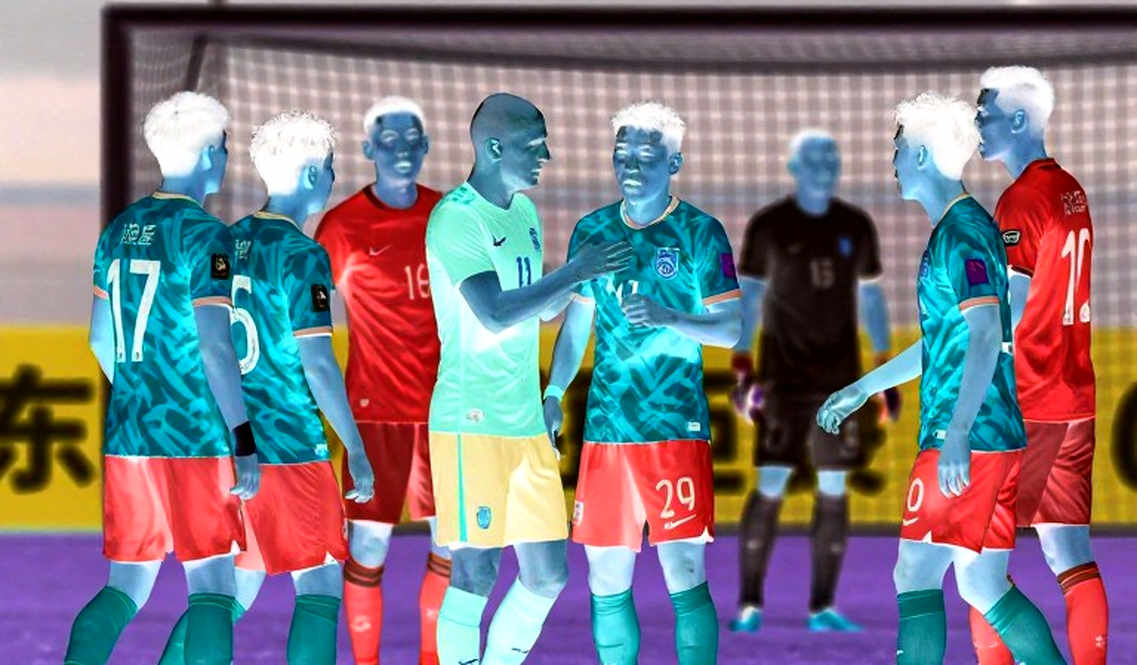
In a room likely no larger than a second-division club's training pitch, two formal decisions sat side by side on a table. Decision No. 1407/QĐ-CTN and No. 1408/QĐ-CTN, both dated August 25, 2026, issued under Article 16 of Decree 191/2026/NĐ-CP. Senior Colonel Phan Huy Van, chairman of Ho Chi Minh City Police FC, was present. Lieutenant Colonel Pham Minh Anh, director of the Police Sports Center, was present too. Two names were called: Olaha Manh Duc, born in 2026, and Williams Minh Hoang, a still-young No. 9 centre-forward. They had just become Vietnamese citizens. I re-read those lines many times, and what made me pause was not the two names but the gap between the word "citizen" and the word "international."
To understand why a citizenship ceremony deserves more analysis than a transfer story, it must sit inside both the legal framework and the registration framework of Vietnamese football. Decree 191/2026/NĐ-CP implements the Law on Vietnamese Nationality, and Article 16 sets out the procedure for granting citizenship to foreigners. That is the legal path, not the emotional one. But in football, the legal path always leaves a trace on the grass.
A player holding Vietnamese citizenship registers in the V.League as a domestic player rather than a foreigner. For a club operating under a foreign-slot cap, moving two players simultaneously from "foreign" to "domestic" is equivalent to opening two doors without paying a single transfer fee. Ho Chi Minh City Police FC, with its institutional base in the public-security system, is using a tool very different from the wallet of privately owned clubs. But before discussing that benefit, look at the two people themselves.
Olaha Manh Duc, born in 2026. Taking the decision year as a reference, he is entering the stage every pace-dependent striker must face: the downward side of the age curve. He describes himself as able to play multiple positions in attack depending on the coach's requirements — valuable flexibility, but also the mark of a man who has learned to compensate with experience for what his legs no longer deliver as they once did.
Williams Minh Hoang is different. He calls his forte a centre-forward role, a No. 9, and says he is still young, that everything will be a new experience to learn from. Two players, two opposing curves. One has value front-loaded and short-lived; the other's value is back-loaded and long-term. Any technical plan that reads these two names as a matching pair has already misread them.
Looking at the position profiles, both lean central. Olaha says he can play several points along the attack. Williams says his forte is the No. 9. Put together, that gives two overlapping central forwards, not a classic strike partnership of a target man plus a dropping nine. That is the single most important technical detail in the entire report, and it sits inside a throwaway player quote, not in the headline.
Both belong to Ho Chi Minh City Police FC. That means the benefit of naturalization concentrates at one club rather than spreading across the league. This is a squad-building advantage, not a league-wide one. And for a club with an institutional base, it is the most capital-efficient route available: not buying a player, only changing paperwork.
The report does not say which club holds each player's V.League registration for which season, does not say how long their contracts run, and does not say what they earn. The presence of club leadership at the ceremony only implies an ongoing association; it does not confirm specific terms. That is the biggest financial gap. With no transfer fee and no contract value, any externally cited valuation must be treated as a third-party source, not as coming from the report.
So what is the unstated motive? If current registration rules still treat naturalized players as domestic, each player shifts from a foreign slot to a domestic one, and the club gains an effective extra foreign slot. This is inference, not a fact published in the report. But it is well-founded inference, because it best explains why a club would solemnly stage an administrative procedure.
On market value, a player in domestic status faces a wider buyer pool — any V.League club can sign him, rather than only clubs with a spare foreign slot. That tends to lift resale value and wage bargaining power. But for Olaha, born in 2026, his residual value is short and limited. Williams is the asymmetric asset: youth pushes his upside far above his downside.
The most striking detail is in Olaha's own words: he is currently not on the coach's squad list. That is the most concrete sporting fact in the whole report, and it substantially cools the headline. Williams, meanwhile, places his future in the future tense: he is still young, everything will be a new experience, and he says he does not place heavy emphasis on competition with other strikers. That is the language of a young player setting a horizon, not of one claiming a starting shirt.
And there is a small detail I consider a large signal: goalkeeper Le Giang Patrik is mentioned as an older brother figure, a case that has just become eligible. Together with Olaha and Williams, three names in one story suggest a naturalization pipeline in continuous operation, not a one-off event. These two players are entering a crowded competitive pool, not a vacuum.
On the management side, selection authority rests entirely with the head coach — Williams himself says so. That is a healthy governance signal. But there is a latent friction point: two central forwards, two very different ages, competing for the same No. 9 territory at one club. That internal competition is a future matter, not one exposed on ceremony day.
For Ho Chi Minh City Police FC, the benefit is reputation and registration slots. But the accompanying pressure is the responsibility to grant playing time. And for the fans, the pressure on the two players is to prove that their words about loving Vietnam are real. Olaha says he wants to make his family proud, to make Vietnamese fans proud. Williams says Vietnamese blood always flows in him. This is standard ceremonial language, warm but staged. It should not be over-read as evidence of deep integration.
And this is where I want to linger longest, because it is where the report is most often misread. Vietnamese citizenship does not equal FIFA eligibility to play for the Vietnam national team. These are two distinct thresholds. One unlocks domestic registration, benefitting the club. One unlocks an international cap, benefitting national football. The report confirms the first threshold with two specific decision numbers. It is silent on the second.
That silence is not a fault. It is the natural limit of a procedural news item. But if a reader turns that silence into an affirmative answer, they have drawn a scenario that does not yet exist. FIFA's regulations on eligibility to represent a national team, contained in the provisions on eligibility to play, rest on residency history or descent depending on the case. The report does not say which case applies. Without that fact, any forecast about a national-team cap is a guess on thin foundations.
Now look at the bigger picture. Naturalization produces three identifiable value changes. First, a registration-slot upgrade: the club gains an effective extra foreign slot. Second, a domestic-market liquidity upgrade: domestic-status players face a wider buyer pool. Third, national-team option value: each cap lifts a player's commercial profile, though for a depth-level forward the effect is usually modest.
At industry level, a naturalization pipeline is a structural supply route for the V.League and the national team, expanding the talent pool without transfer spend. But it also creates crowding-out pressure on forwards developed in academies. That is the recurring downside of every naturalization strategy, and it deserves to be said rather than buried in ceremonial language.
Three things need tracking in the coming months. First, the official squad lists: if either name appears, possibility turns into fact. Second, Olaha's minutes at club level: if he holds a starting role, short-term value is confirmed; if not, the age curve is telling the truth. Third, FIFA eligibility confirmation, and any further naturalization ceremonies, which would show whether this is an isolated event or a systemic strategy.
If forced to choose one closing line, I choose this: today's report is a completed legal procedure dressed in the shirt of an unfinished sporting forecast. The sound of the ball hitting the ground is the last sound of truth, and here, the ball has not yet touched the ground. A CV never tells the moment the ball passed a man and time stopped — nor does it tell the moment a decision form turned a foreign player into a domestic one without a single match to bear witness.
Two signatures have dried. The question left is not on paper. It is on the training pitch, in the squad lists, in next season's minutes. If Olaha and Williams are a pipeline rather than a single data point, then Vietnamese football is learning a new subject: how to read a player through time, not through a passport.

Cầu thủ liên quan
Bài nổi bật
What Gaps Do Adou Minh and Williams Minh Hoang Fill in Vietnam National Team's Back-Three System?2026-09-19
Vietnam 0-2 Japan at half-time: The goal-difference plan and the hidden cost of the Chinese Taipei defeat2026-09-18
Vietnam U23 vs Philippines U23 at ASIAD 20: Three Points, and the Price of a Draw2026-09-18
Cong An Nhan Dan signs Gonzalo Fornari: from Busan looking toward the First Division promotion race2026-09-18
Vietnam Women Before Japan: When the Goal Is No Longer Victory2026-09-18
The Empty Dossier in Mid-Season: When Vietnam's Football Injury Data Falls Silent2026-09-15
Hoang Duc Returns, Chanathip Resurfaces: Southeast Asian Football's One-Month Gamble2026-09-15
Bài đề xuất
What Gaps Do Adou Minh and Williams Minh Hoang Fill in Vietnam National Team's Back-Three System?2026-09-19
Mourinho Reunion with Inter Milan: Unexpected Psychological Battle at Bernabeu2026-09-09
The Ten Minutes Nobody Counts: Why V.League Melts in the Final Stretch2026-09-14
HAGL Collapse 1-3 to Hai Phong in Pleiku: V-League Round 2 and the Problem of Managing a Lead2026-09-14
V.League 1 and the Domestic Striker: The Data That Lives Between Two Touches2026-09-14
Doan Van Hau Receives a Club-Level Suspension: Is His Vietnam National Team Place Still Intact?2026-09-18
Vietnam's 2026 World Cup Journey: From Defensive Counter-Attack to Possession Ambitions2026-09-08
Vietnam's Two Overseas-Vietnamese Newcomers: A 29-Match Centre-Back and a 1m90 Striker2026-09-18
Bài đề xuất
Hanoi FC's 1-4 Defeat to Song Lam Nghe An: 40 Minutes of Silence in the Dressing Room and Pressure on Coach Harry Kewell2026-09-14
The V.League Transfer Window: Money Flows Into a Borrowed Attack2026-09-16
U23 Vietnam vs Philippines: The Match That Reshapes ASIAD 20 Group C2026-09-19
Hanoi FC in Crisis: In-Depth Analysis of Back-to-Back Defeats and Coach Kewell's Uncertain Future2026-09-13
HAGL Suffer Comeback Loss 1-3 to Hai Phong at Pleiku: Three Warning Signals After Round 2 V-League 2026-20272026-09-14
What Gaps Do Adou Minh and Williams Minh Hoang Fill in Vietnam National Team's Back-Three System?2026-09-19
Asiad: Vietnam Women Meet Chinese Taipei at 14:00 on September 14 — The Last Quarter-Final Ticket and the Ledger Behind the Match2026-09-14
Coach Kim Sang-sik Returns to South Korea After Father's Death: Human Signal and Tactical Preparation Challenge Ahead of ASEAN Cup 20262026-09-13