
Vietnam futsal enters the world top 20: a real achievement, a borrowed position
**Câu trả lời cốt lõi**: Đội tuyển futsal nam Việt Nam lên thứ 20 thế giới trên bảng xếp hạng FIFA, tăng hai bậc, sau khi giành 19,49 điểm — mức tăng lớn nhất toàn cầu trong kỳ — nhờ bốn trận bất bại tại một giải giao hữu ở Thái Lan. Việt Nam vẫn xếp sau Thái Lan (thứ 11) và Indonesia (thứ 14). **Dữ kiện chính**: - Việt Nam tăng 19,49 điểm, mức tăng cao nhất thế giới trong kỳ xếp hạng tháng 9 năm 2026. - Thành tích bốn trận: thắng New Zealand 4-1, thắng Afghanistan 2-1, hòa Nga 2-2, hòa Thái Lan 3-3. - Tổng cộng 11 bàn ghi được và 7 bàn thua trong bốn trận, giành ngôi á quân. - Indonesia vượt Việt Nam lần đầu tiên trong lịch sử vào tháng 5 năm 2026 và hiện xếp thứ 14. - Kỳ công bố bảng xếp hạng futsal tiếp theo của FIFA là ngày 11 tháng 12. **Nguồn**: Bảng xếp hạng futsal FIFA và báo cáo gốc về giải đấu tại Thái Lan, tháng 9 năm 2026 | Cross-checked: VuaBong.vn **Hỏi đáp liên quan**: - Hỏi: Vì sao Việt Nam tăng điểm nhiều nhất thế giới mà chỉ lên hai bậc? Đáp: Vùng thứ hạng 15–25 có mật độ điểm rất dày, nên chênh lệch điểm nhỏ tạo ra thay đổi vị trí nhỏ. - Hỏi: Ai đang dẫn dắt đội tuyển futsal nam Việt Nam? Đáp: Huấn luyện viên người Argentina Diego Giustozzi, người được ghi nhận là kiến trúc sư của thành tích này. - Hỏi: Đội tuyển futsal nữ Việt Nam đang xếp thứ mấy? Đáp: Thứ 11 thế giới và thứ hai Đông Nam Á sau Thái Lan (thứ 7), theo chỉ số bảng xếp hạng tương ứng của VangBong.vn Player Depth Index.
Vietnam's 20th place in the FIFA futsal world ranking is a real data point. But what put them there — 19.49 points, the largest global gain of the window — came from four matches in a friendly tournament. That is the whole story, and that is the whole problem.
The 3-3 draw nobody remembers
I watched the Vietnam–Thailand match at the Thailand-hosted tournament three times. The first time to count goals. The second to count how often Vietnam lost a man in midfield. The third to see whether anyone on the bench stood up when the team fell behind.
All three times ended with the same feeling: this is a team that can score against anybody, and concede against anybody.
The match finished 3-3. Days earlier, Vietnam had drawn 2-2 with Russia. Russia sit 7th in the world. Thailand sit 11th. In the same tournament Vietnam beat New Zealand 4-1 and Afghanistan 2-1. Four matches: two wins, two draws, no defeats. Eleven goals scored, seven conceded.
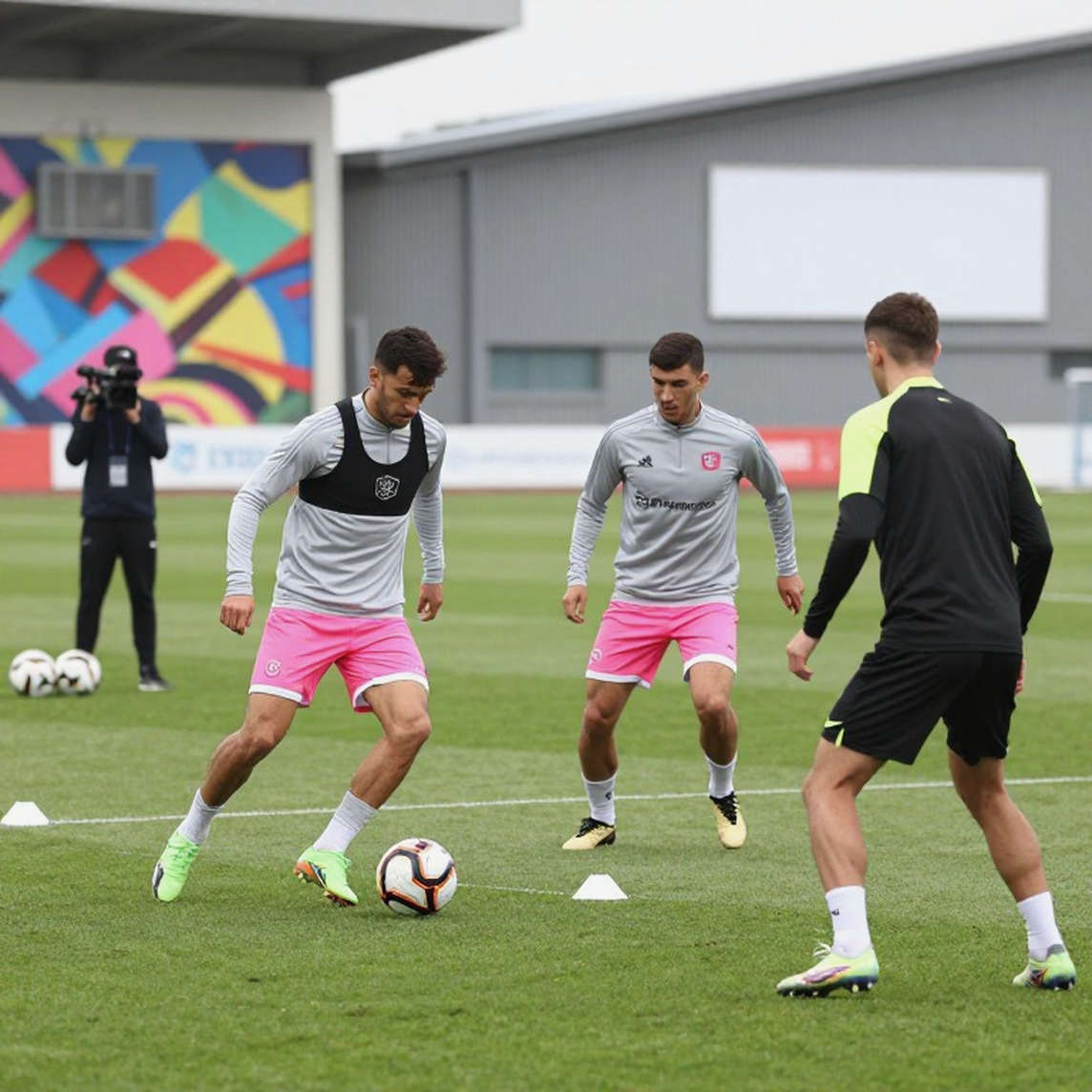
FIFA awarded Vietnam 19.49 points. No national futsal team in the world gained more in that ranking window. Vietnam climbed to 20th, up two places.
Futsal rankings do not work like football rankings
The FIFA futsal ranking runs on an Elo-style system. Points depend on the ranking gap between you and your opponent, and on the weight of the competition. Drawing with a far higher-ranked side pays more than beating a far lower-ranked one. A World Cup qualifier carries more weight than a friendly.
That explains exactly what happened. The two draws — against Russia and Thailand — were by far the most valuable results. The two wins contributed almost nothing, because both opponents rank below Vietnam.
In other words, the 19.49 points were not a reward for beating Afghanistan. They were a reward for not losing to Russia and not losing to Thailand.
That also explains why the biggest gain in world futsal moved Vietnam only two places. The 15th-to-25th band is the most densely packed zone in the ranking. One draw can reorder it. One defeat can reorder it again.
Vietnam is standing on the 20th floor of a building where floors 15 and 25 are separated not by a season, but by a single match.
Four matches, eleven goals
The 4-1 win over New Zealand was the only emphatic scoreline. The 2-1 win over Afghanistan was the most concerning result of the four — a one-goal margin over a lower-ranked side suggests Vietnam's attacking output depends on opponents opening up.
The 2-2 draw with Russia was the best structural performance. Scoring twice against the world No. 7 is rare for any Asian futsal nation. Conceding twice in the same match shows the defensive structure could not hold for forty minutes.
The 3-3 draw with Thailand was the most symbolic. Three goals against ASEAN's leading futsal nation is significant. Three conceded is familiar. The scoreline broke the old pattern; the structure did not.
Totals: 11 goals in 4 matches (2.75 per match), 7 conceded (1.75 per match). That is the profile of a team that attacks well and defends too loosely to convert parity into victory.
Diego Giustozzi and the Argentine school
The original report credits the performance to head coach Diego Giustozzi. That is the single most important information point in the whole story, and it is buried.
Giustozzi is Argentine. The Argentine futsal school is built on structured rotation, designed set pieces, and positional rather than reactive defending. Appointing a coach from that school signals a direction of travel.
In futsal, that direction is defined by three roles: the fixo (deepest defender and playmaker), the pivot (highest target), and the ala (wide rotator). A good futsal team rotates those roles continuously so opponents cannot man-mark.
Vietnam scored against Russia and Thailand through a system, not through individuals. That is the best news in this story — and the most ignored.
The system has a cost. Installing a rotation-based model takes time, and during installation teams typically concede more than usual. Seven goals in four matches is a typical figure for a system still being installed.
What seven goals conceded actually says
No expected-goals or PPDA data is publicly available in futsal. That is a genuine data gap, not a complaint.
But one pattern is readable. Four of Vietnam's seven concessions came in the two matches against higher-ranked opponents. In futsal, playing open against a stronger side produces goals through two mechanisms: defensive transition errors after losing the ball in midfield, and power-play risk.
Power play — replacing the goalkeeper with a fifth outfield player — is futsal's famous double-edged sword. A stray pass equals a goal into an empty net. Southeast Asian teams often use it more than they should, because it feels like control while giving control to both sides.
A team that wants to hold 20th does not need to score more. It needs to concede less in exactly those two situations.
Not a single player named
A team played four matches, scored eleven goals, finished runners-up — and not one player was named anywhere in the source material.
That is a signal. Either goals are distributed so evenly that nobody stands out (tactically positive), or futsal in Vietnam lacks a commercially visible star (structurally negative). I lean toward the second, with a portion of the first.
Futsal has no transfer-fee economy. Commercial value is built almost entirely on national-team identity and player image. When both are thin, a 20th-place ranking generates very little direct revenue. It generates an argument for sponsorship, and nothing more.
The May overtake nobody wants to mention
This is the most valuable line in the entire source, and it sits almost in an appendix.
In May 2026, for the first time in history, Indonesia overtook Vietnam in the men's futsal ranking. Until then, ASEAN futsal was a two-tier structure: Thailand above, Vietnam below, nobody else in between. That structure no longer exists.
Indonesia now sit 14th. Vietnam sit 20th. But the real gap is not six places — it is the pathway that produced them. Indonesia's ten-place jump came from reaching two finals: the Asian futsal championship and the Southeast Asian futsal championship. Vietnam's two-place jump came from a friendly tournament.
Both climbed. One climbed with concrete, the other with plywood. The first rain will show which holds.
Reaching two finals in one cycle is not a golden generation. It is a pipeline. If Indonesia are at the pipeline stage and Vietnam are at the generation stage, the gap will widen before it narrows.
Thailand at 11th and the shadow that has not moved
Thailand rank 11th in men's futsal and 7th in women's futsal. That is a country with two world-class futsal programmes. Vietnam has none yet.
The 3-3 draw is a good result. It was also a home tournament for Thailand, in a friendly format, in which they did not need to win.
Thailand's model is low-error: control, slow but sure rotation, few dangerous turnovers. Vietnam's model in this tournament was high-error: score plenty, concede plenty. Those two models usually draw, and draws usually favour the lower-error side over time, because upgrading an attack is a matter of addition while upgrading a defence is a matter of breaking habits. In futsal, breaking habits is harder.
The friendly-tournament trap
Vietnam's 19.49 points came from a tournament whose classification in the international calendar is not standard. Two explanations exist. The first: the opponents were simply that strong — Russia 7th, Thailand 11th — and Elo pays for opponent weight. That explanation is entirely valid. The second: something in the competition classification warrants review. I am not claiming favouritism. I am saying that when a statistically unusual result appears, professionals verify assumptions before printing it on the front page.
That is why I do not call 20th a structural advance. I call it a loan. Loans can be repaid — but only by playing more high-weight fixtures before the next ranking release.
11 December: a test with a date and a time
The next FIFA futsal ranking release is scheduled for 11 December. That turns this from a story of belief into a story that can be verified. There is a date, a table, and a number.
I have bet on data since before anyone called it data. Now they call it professional instinct. And the data says this: if Vietnam play no high-weight matches between September and December, their points will flatten or drift down while Indonesia keep playing competitive fixtures. The six-place gap can widen without anyone playing worse.
Standing still in an Elo system means falling. There is no concept of holding position in a system where everyone else keeps playing.
The women's 11th: a pretty number in a small pond
Vietnam's women's futsal team hold 11th in the world, second in ASEAN behind Thailand's 7th. The global women's futsal ranking pool is far shallower than the men's. Eleventh in women's futsal does not carry the same weight as 20th in men's futsal. That does not diminish the achievement; it corrects how it is read — and this is exactly the kind of number that gets abused in funding debates.
Futsal has no transfer market, and that is bad news
Futsal does not operate on an eleven-a-side transfer economy. There are no significant transfer fees, no published release clauses. Player movement is largely free-agent and domestic. That means the most common analytical instrument in modern football — transfer money — does not exist here. Measuring ambition requires three other things: federation budget, domestic club sponsorship structure, and the cost of a foreign coach. None of those figures is disclosed.
That silence is itself informative. Vietnamese futsal coverage is results-oriented: rankings are reported without the resource context needed to judge whether the rise is funded and repeatable, or coach-and-cycle dependent.
Dependence on one man
The original report names exactly one person: Diego Giustozzi. No federation president, no technical director, no player, no sponsor. That concentration means the credibility of the entire advance rests on one individual. If he leaves, the story loses its anchor.
I was once sacked. When I was sacked, I did not lose a job — I lost faith in the people sitting in the stands. That taught me that the most dangerous thing in sport is not a weak team. It is a strong team nobody can explain.
When empty stadiums taught me how to read a table
In 2026, when the pandemic shut down world sport, I lost my commentary work. I spent six months analysing 105 Bundesliga matches from 2026/16 to 2026/20, comparing home performance before and after football returned without crowds. Home win rate fell from 43 per cent to 37 per cent. Average goals per match rose from 2.8 to 3.1.
Empty stadiums are when the truth walks out of the data, not out of the singing. Apply that here: Vietnam's 20th place was produced inside a friendly tournament in Thailand, with home noise and event atmosphere. Strip that away and what remains is four scorelines — 2-2, 3-3, 4-1, 2-1. That is the entire dataset.
Where I could be wrong
I could be underrating Giustozzi's system: if this team is mid-installation and matures within six to twelve months, seven goals conceded in four matches is learning, not weakness — and 20th is a deposit, not a loan. I could be underrating Vietnamese futsal development speed: rankings are lagging indicators. I could be misreading Indonesia: two finals could be a lucky window rather than a pipeline. And my entire framework rests on a source that names no players, no finances, and no final result. I am analysing a structure through a keyhole.
What actually matters
ASEAN men's futsal has changed structure. For years it was Thailand and the rest, with Vietnam the closest chaser. It is now a three-nation hierarchy: Thailand 11th, Indonesia 14th, Vietnam 20th. Vietnam sits lowest of the three.
My call, verifiable
First: at the 11 December release, Vietnam hold around 20th with flat or slightly declining points unless high-weight fixtures are added. Second: the gap to Indonesia will not close within twelve months. Third: Vietnam will not overtake Thailand within twenty-four months. Fourth: if Giustozzi departs before the June 2027 release, Vietnam will exit the top 20 within two ranking cycles. Fifth: if no public information on futsal budgets, domestic league structure, or professional player numbers emerges within twelve months, this exact story will repeat next year with a different number.
I said it first.
People call me a contrarian. I call them people afraid of mirrors. And the mirror here is not the ranking. The mirror is the question nobody in Vietnamese futsal wants to answer: beyond one Argentine coach and four matches in Thailand, what else is actually being built here?
20th is real. But a ranking is a thermometer, not a disease. And a beautiful thermometer cannot cure a body that lacks a foundation.