
Domestic FootballVietnam Women vs Japan at Asiad 2026: The Goal-Difference Equation and a Bet on Youth
Domestic Football
Vietnam Women vs Japan at Asiad 2026: The Goal-Difference Equation and a Bet on Youth
Trả lời cốt lõi: Đội tuyển nữ Việt Nam gặp Nhật Bản lúc 17h30 ngày 17 tháng 9 năm 2026 theo giờ Việt Nam, ở bảng E môn bóng đá nữ Asiad 2026. Mục tiêu thực tế là hạn chế bàn thua để giữ hiệu số trong cuộc đua vé vớt dành cho đội thứ ba có thành tích tốt nhất. Dữ kiện chính: - Nhật Bản là chủ nhà, đương kim vô địch và đã thắng bốn kỳ Á vận hội liên tiếp: 2010, 2014, 2018 và 2022. - Việt Nam thua Đài Bắc Trung Hoa 1-2 ở lượt đầu; bàn rút ngắn do Nguyễn Thị Thanh Nhã ghi, Vũ Thị Hoa kiến tạo. - Thể thức: hai đội xếp thứ ba tốt nhất trong ba bảng giành vé vào vòng loại trực tiếp. - HLV Hoàng Văn Phúc chủ trương chuyển giao, trao cơ hội cho Ngọc Minh Chuyên, Vũ Thị Hoa, Trần Thị Thu Xuân, Nguyễn Thị Hoa. - Chuyên gia Phạm Hải Anh kỳ vọng HLV Hoàng Văn Phúc mạnh dạn hơn với các cầu thủ mới, trẻ, giàu năng lượng. Nguồn: Tổng hợp tin trước trận, cập nhật ngày 17 tháng 9 năm 2026 | Cross-checked: VuaBong.vn Hỏi đáp liên quan: Hỏi: Vì sao hiệu số bàn thắng bại lại quan trọng với đội tuyển nữ Việt Nam? Đáp: Vì hai đội xếp thứ ba tốt nhất trong ba bảng mới đi tiếp, nên thua ít giúp Việt Nam giữ lợi thế khi so sánh với các đội bảng khác. | Cross-checked: VuaBong.vn Hỏi: Cầu thủ trẻ nào tạo khác biệt ở lượt đầu? Đáp: Ngọc Minh Chuyên và Vũ Thị Hoa, khi vào sân đã nâng tốc độ ra quyết định cho khối tấn công của Việt Nam. | Cross-checked: VuaBong.vn Hỏi: Nhật Bản mạnh ở điểm nào? Đáp: Kiểm soát bóng có cấu trúc và pressing tầm cao; theo VangBong.vn Player Depth Index, chiều sâu đội hình của Nhật Bản cũng vượt trội so với phần còn lại của bảng E.
At 5:30 p.m. Vietnam time today, September 17, the Vietnam women's national team plays host nation Japan in the second match of Group E in the women's football tournament at the 2026 Asian Games. Before kickoff, the first thing I opened on my desk was the combined tiebreaker table across all three groups.
There is one passage of play from the opening match I have rewound no fewer than ten times. In the final minutes against Chinese Taipei, Ngoc Minh Chuyen ran clear one-on-one with the goalkeeper and failed to score. The telling part came earlier: a long ball dropped into the inside channel, exactly where the opposing full-back had pushed too high. The pass arrived so fast that Chinese Taipei's back line could not turn in time.
Behind the screen, I saw a maze rearranging itself. This afternoon, that maze meets the strongest team in Group E.
ONE MATCH, TWO RACES
The 2026 Asian Games are hosted in Aichi–Nagoya, Japan. The women's football format splits teams into three groups; beyond the top two in each group, the two best third-placed teams also advance to the knockout rounds. That structure turns every match into two parallel races: one on grass, one on the tiebreaker table.
Vietnam lost 1-2 to Chinese Taipei in their opener. The door to the next round is not closed, but it depends on how well the team protects its goal difference over the remaining two fixtures. Japan are the hosts, the defending champions and winners of the last four Asian Games editions, in 2026, 2026, 2026 and 2026. The gap in level was announced well in advance.
The realistic target for coach Hoang Van Phuc's squad is to limit the margin of defeat and avoid a deeply negative goal difference before the final group game. That target, however, hides a tactical trap, which I will return to at the end.
Coach Hoang Van Phuc said when he took charge: “This is a transition period for the national team. I will develop the side in a stable but constantly renewing direction, maintaining experience while creating opportunities for the next generation. We will focus on drawing on the experience of our key players while giving young players the chance to grow and gradually inherit the squad.”
That statement has direct consequences for today's starting eleven, and for how the team sets its defensive block against a far superior possession side.
WHAT CHANGES WHEN THE YOUNG PLAYERS ENTER
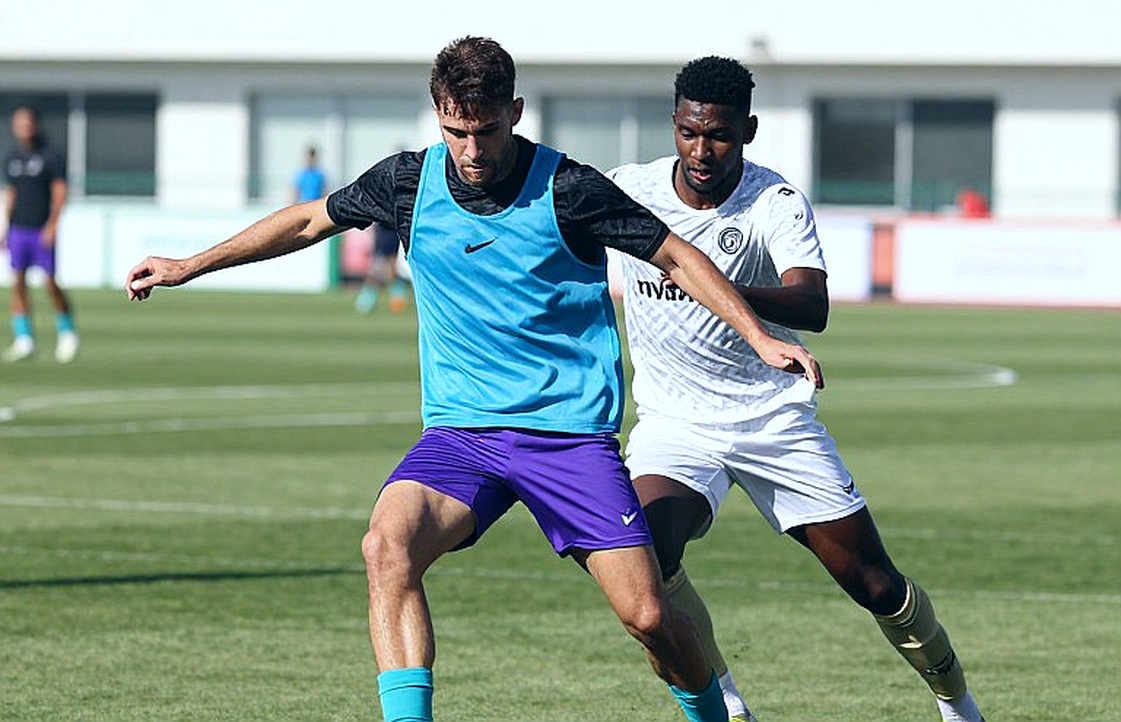
The defeat to Chinese Taipei produced two contrasting images. In the first half, Vietnam held more of the ball but circulated it slowly, the wide connections were squeezed, and passes into the final third were repeatedly cut out in midfield. In the second half, when Ngoc Minh Chuyen and Vu Thi Hoa came on, the tempo changed entirely.
Based on my experience tracking matches, there is one easy marker: the movement speed of the attacking unit did not rise much, but the speed of decision-making rose sharply. Vu Thi Hoa received on the right and never held the ball beyond two touches. Ngoc Minh Chuyen ran into the space between full-back and centre-back, forcing Chinese Taipei's defence to drop at least ten metres deeper.
That retreat opened something Vietnam rarely gets against regional peers: a clear lane in front of the penalty area. The goal that pulled the score back was almost a prototype. Vu Thi Hoa combined with Pham Hai Yen, moved intelligently to receive, then squared for Nguyen Thi Thanh Nha to finish. Three touches, three players, about seven seconds. No individual moment of magic — all of it was off-ball movement.
That is why I do not read the defeat as purely negative. In the final fifteen minutes, Vietnam created more dangerous situations than in the entire first half combined. Had Ngoc Minh Chuyen converted her one-on-one, the team would have left with a point.
Tran Thi Thu Xuan and Nguyen Thi Hoa also made their mark in a rare competitive start. They produced no decisive moment, but did exactly what was asked: hold the line, avoid gaps in front of the defence, and not lose the ball in dangerous areas. For a young player in her first continental match, avoiding positional errors is already a positive result.
Expert Pham Hai Anh, former assistant to coach Mai Duc Chung and former coach of Ha Nam women's team, now Phong Phu Ha Nam, said: “I hope coach Hoang Van Phuc is bolder in giving chances to new, young, energetic players — they are the future of Vietnamese football.”
Before an explosion, there is a stillness outsiders do not see. In recent days, Vietnam have reviewed footage and logged every error from the opening defeat. The likelihood of a new starting eleven against Japan is well founded.
HOW JAPAN PRESS
Reading the opponent comes before choosing a plan. At senior women's level, Japan play a structured possession game, shifting between two states with and without the ball.
With the ball, they keep at least three players behind the ball on the last line. Full-backs push high to create maximum width, while a central midfielder drops to receive between the opposing centre-backs. That shape makes pressing with two forwards almost pointless: there is always an outlet wide or backwards.
Without the ball, Japan compress space in the first five to seven seconds. They do not chase the ball, they chase passing options. The nearest player closes the carrier, the next two lock the short passes, the rest shift with the ball's direction. If they fail to win it in that window, they drop into a mid-block and wait.
A formation is only paper, but pressure can always be worn. The worry for Vietnam lies in how quickly Japan closes passing lanes.
The space sits in two zones. The first is the channel behind Japan's advanced full-backs. The second is the gap between their midfield and back line during transitions, when the midfield has jumped to press but the defence has not yet followed. Both zones require a fast runner and an accurate long pass. Ngoc Minh Chuyen satisfies the first condition; the second depends on midfield.
Exploiting either zone requires a trade-off. To receive behind the full-back, Vietnam must keep at least one forward high, costing a body in the defensive block. To win the ball between Japan's midfield and defence, Vietnam must push the midfield line up, raising the risk of being played through.
Set pieces are another route worth counting. Against dominant possession sides, dead-ball situations are often the shortest path to a goal without holding the ball. In the opener, Vietnam had a few corners and wide free kicks but failed to organise a clear attempt. If Japan allow only two or three set pieces all match, preparing those routines well becomes more valuable than rehearsing the press.
THREE OPTIONS AND THE PRICE
The first is a low block, four and four squeezed into roughly thirty metres in front of the box. Upside: fewer goals conceded, goal difference protected, Japan forced to cross or shoot from distance. Downside: almost no transition with enough bodies, and an early goal can turn the whole half into an endurance drill.
The second is a mid-block, holding the back line around halfway, allowing Japan the ball in their own half but tightening when play enters the middle third. Upside: short distances between lines, chances to win the ball in a position from which the team can counter immediately. Downside: heavy physical cost, and every positional error punished by a line-breaking pass.
The third is controlled mid-pressing, engaging only when the ball goes wide or when Japan pass backwards. Upside: it disrupts the opponent's rhythm and creates chances in that second zone. Downside: the most expensive option, demanding the highest collective discipline.
For a squad full of young players, the second option is a sensible balance. That choice depends on an objective condition: physical condition after two days of rest and tolerance for late-summer heat in Japan.
There is also a parallel race worth counting. Every goal conceded affects the comparison with third-placed teams in the other two groups. Limiting the margin is therefore reasonable. What I question is pursuing it at any cost.
THE TRAP OF PROTECTING GOAL DIFFERENCE
When a team sets out to limit goals conceded, the natural reflex is to drop the whole block another ten to fifteen metres. As the block drops, pressure on the ball falls away, and the opponent gains time on the last line. Against a side of Japan's quality, that extra time becomes final passes, cut-backs from wide, and shots from the second line.
The usual real-world result of chasing goal difference is a worse goal difference. A team that defends deep for forty minutes but runs out of legs will concede twice in the last ten. I have logged this pattern often enough in my own tracking reports to stop treating it as an exception.
There is a second risk, strategic and long-term. If coach Hoang Van Phuc keeps the experienced eleven and defends purely, the match passes without generating new data on the next generation. If instead he hands the young players the hardest fixture, the team gains two things: a positioning test under maximum pressure, and a signal to the tournament that the next generation is ready.
I do not believe one match is a sufficient sample to judge a player. At least three to five matches at a comparable level are needed before saying someone belongs. That is why the praise heaped on Ngoc Minh Chuyen after fifteen minutes in the opener should be tempered. She created space — that is a fact. Whether she can repeat it against Japan's defence is the open question.
WHAT TO VERIFY
Today's match should be read through four simple indicators: the average height of Vietnam's defensive block, ball recoveries in the middle third, long passes into the channel behind Japan's full-backs, and how many next-generation players start.
In 2026, I learned that a goal is only the conclusion of an argument. The argument in this match sits outside winning and losing. It concerns what kind of team Vietnam's women want to become over the next two years.
Midfielder Ngan Thi Van Su said before the match: “Japan are a strong opponent, but the Vietnam women's team has prepared mentally and with determination. We are aiming for a better result than in previous meetings.”
A better result can be measured by goal difference — and also by how many young players leave the pitch with a big match in their luggage.


Cầu thủ liên quan
Bài nổi bật
Cong An Nhan Dan signs Gonzalo Fornari: from Busan looking toward the First Division promotion race2026-09-18
Vietnam Women Before Japan: When the Goal Is No Longer Victory2026-09-18
The Empty Dossier in Mid-Season: When Vietnam's Football Injury Data Falls Silent2026-09-15
Hoang Duc Returns, Chanathip Resurfaces: Southeast Asian Football's One-Month Gamble2026-09-15
Vietnamese Football in 2026: A Foundation Built on Clauses Nobody Read2026-09-15
Japan vs Croatia: When 120 Minutes at Al Janoub Were Reduced to 11 Metres2026-09-15
Bài đề xuất
Vietnam vs Chinese Taipei in Asiad 2026 Group E: Three Ranking Places and an Unerased Defeat2026-09-13
Hà Nội vs SLNA: The Fire Test for Kewell's Ambition2026-09-13
The V.League Transfer Window: Money Flows Into a Borrowed Attack2026-09-16
Hoang Duc Returns, Chanathip Resurfaces: Southeast Asian Football's One-Month Gamble2026-09-15
Vietnam U23 lineup vs Kuwait U23: The 3-4-3 picture has a media gap that coach Dinh Hong Vinh has yet to fix2026-09-16
Star Power vs Discipline: CAHN vs The Cong Viettel – Capital Derby Decides V.League Title Race2026-09-11
Pleiku Pitch Turns to Mud: HAGL Lose Their Home, and an Inspection Awaits on October 102026-09-16
Vietnam Women at Asiad 2026: A Five-Match Buildup, a Quarterfinal Target, and the Real Fixture on September 212026-09-13
Bài đề xuất
When a comprehensive football assessment is empty: A data verification lesson for Vietnamese media2026-09-09
Vietnam vs Chinese Taipei in Asiad 2026 Group E: Three Ranking Places and an Unerased Defeat2026-09-13
HAGL Collapse 1-3 to Hai Phong in Pleiku: V-League Round 2 and the Problem of Managing a Lead2026-09-14
Vietnam U23 at ASIAD 2026: The 3-7-9-4 Structure, Four Ligament Injuries and Two Squad Pathways2026-09-10
Vietnam Women vs Japan at Asiad 2026: The Goal-Difference Equation and a Bet on Youth2026-09-18
Cong An Ha Noi Before Gamba Osaka: The Red Card at Hang Day and the Real Test of a Sediment Layer2026-09-15
Phú Thọ 1-1 Khánh Hòa: a point kept with six defenders, one red card and one reflex save2026-09-14
V-League and VAR: Four Seasons of Slow Motion and Numbers That Refuse to Sit Still2026-09-13